Before You Go — Get BRAND BOA Updates Top Products, Shed Plans & Estimating Tips
Join homeowners, DIY builders & contractors
Subscribe to receive construction product recommendations, shed plan updates, BOQ tips, and useful buying guides for tools, materials, finishes, and building essentials. We’ll help you discover selected products from trusted USA suppliers and share practical ideas to plan, price, and build smarter.
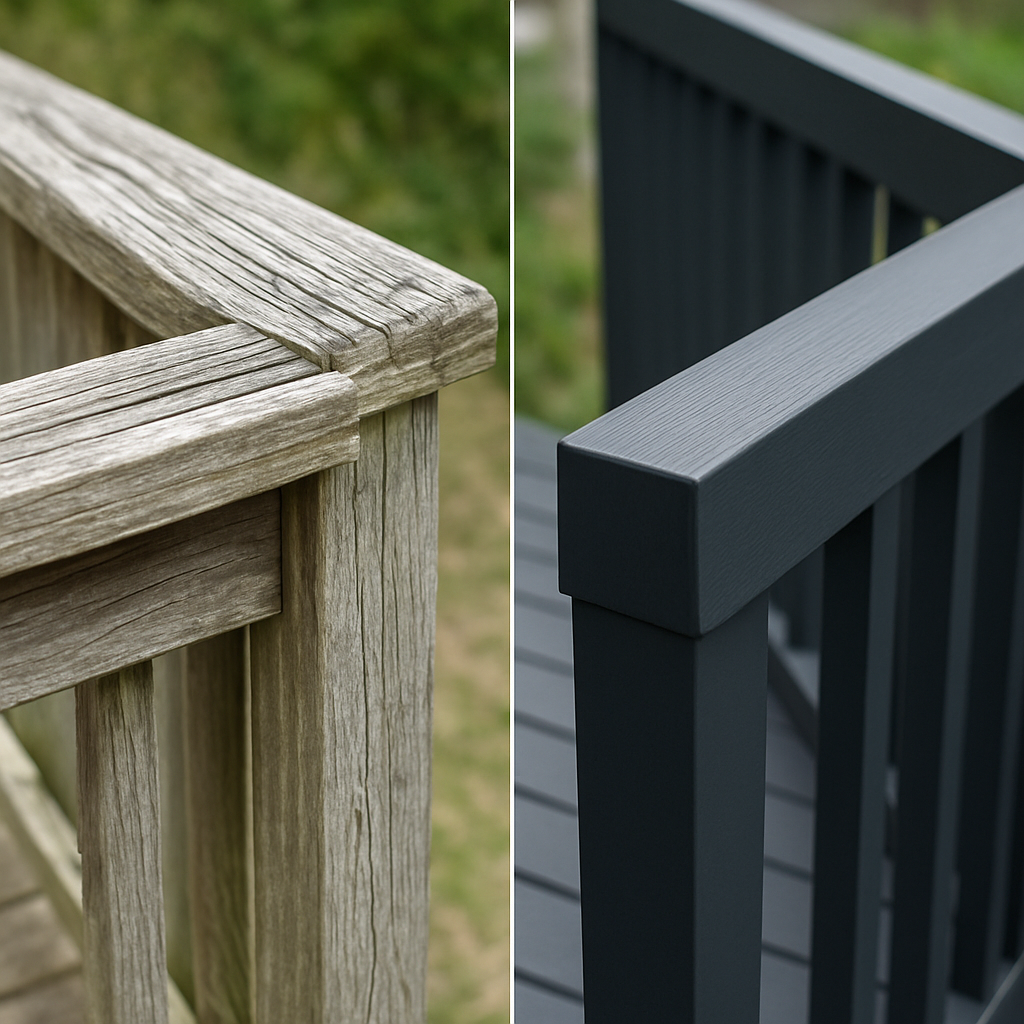
Think about the last time you spent a whole weekend sanding and staining your deck railing. Now, imagine never doing that again. The traditional maintenance cycle of scraping peeling paint is exhausting, which is why demand for low-maintenance deck handrails has skyrocketed. Industry data reveals that skipping this endless wood upkeep saves homeowners over 20 hours of hard labor annually.
If you want to upgrade your home’s exterior while adding long-term value, composite railing offers the perfect middle ground between high-end aesthetics and zero-effort upkeep. Essentially, a composite handrail is crafted from a smart recipe of recycled wood fibers and durable plastic. It looks like real timber, but the plastic acts like a protective shield against moisture, rot, and weather damage.
Beyond saving your summer weekends, this modern material provides essential peace of mind for families. Since the boards never splinter, warp, or crack as they age, children and pets can safely grab the rails without you constantly worrying about painful injuries.
Why Capped Polymer Technology Stops Rot Before It Starts
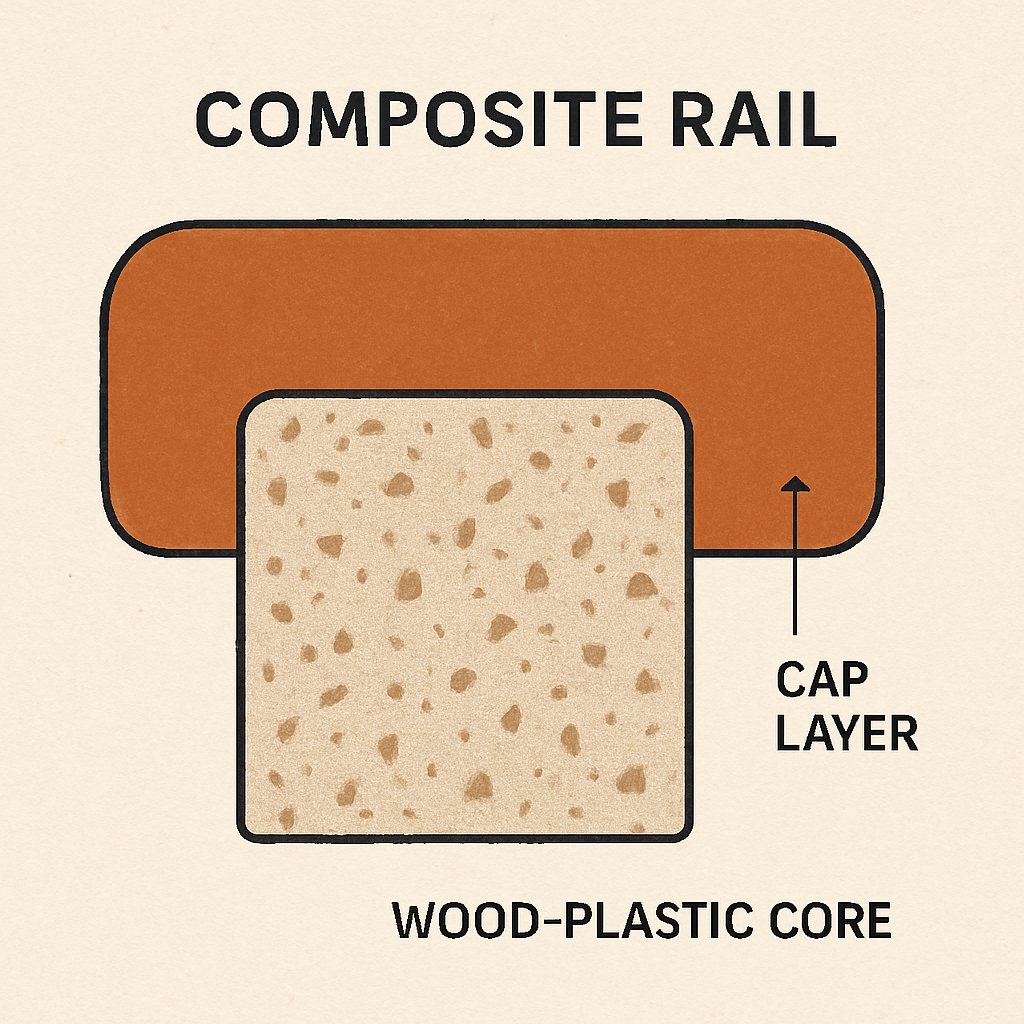
You already know that when wood drinks up moisture, it eventually rots. To solve this, manufacturers mix recycled wood fibers with durable plastics to create the sturdy core of a modern composite deck handrail. This blended recipe gives you the solid, familiar feel of traditional lumber without the constant worry of water damage.
But the real magic happens during a manufacturing process called co-extrusion, where a protective outer layer is permanently fused to that core. Think of this capped polymer deck barrier technology as a tough suit of armor for your railing. This completely synthetic shield seals out rain and melting snow, ensuring the inner wood fibers stay absolutely dry.
When evaluating older wood-plastic vs aluminum deck guards, today’s capped composite shell stands out because it won’t break down or fade under harsh UV rays. Since moisture simply cannot penetrate that protective outer armor, rot is effectively stopped before it ever starts. That absolute weather resistance is exactly why you’ll never sand or stain again.
Why You’ll Never Sand or Stain Again
Remember the messy brushes and sore shoulders from your annual wood maintenance? Those days are over. Because color pigments are baked directly into the protective cap during manufacturing, you get fade-resistant balcony balustrades that look fresh year after year. You completely eliminate the recurring costs and physical headache of yearly staining supplies.
Instead of heavy labor, your new upkeep routine takes just a few minutes. Follow this basic cleaning guide for engineered composite railings to clear away seasonal dirt:
Mix mild dish soap with warm water.
Gently scrub the surfaces using a soft-bristle brush.
Rinse everything away with a standard garden hose.
Maintaining a durable composite staircase fence is that straightforward. Beyond saving you money and giving you back your summer weekends, this zero-sanding reality means the surface never splinters or flakes, leading directly into another major benefit: keeping your hands splinter-free and safe.
Keeping Your Hands Splinter-Free and Safe
Running a hand along older wooden fences often ends painfully, but composite deck railing eliminates that risk entirely. Its protective outer shield never splinters, keeping curious toddlers and pets completely safe when they grab the edge. This non-porous cap also acts as a waterproof barrier, preventing mold on outdoor porch systems from creating dangerously slippery surfaces where your family leans.
Beyond smooth finishes, proper installation guarantees true structural security. When upgrading, you must follow basic building code requirements for residential deck height and gaps to ensure everyone’s safety:
Height: Railing systems must be at least 36 inches tall, or 42 inches for higher elevations.
Baluster Spacing: The vertical posts—known as balusters—must sit less than 4 inches apart so a small child cannot slip through.
Protecting your family from tiny splinters and serious falls brings ultimate peace of mind. Yet, given these premium upgrades and strict safety standards, you might be questioning the initial investment. Is the higher price tag actually a long-term bargain?
Is the Higher Price Tag Actually a Long-Term Bargain?
Sticker shock is common when upgrading, making many homeowners ask: are synthetic railings worth the cost? While traditional wood seems cheaper at the register, a simple break-even analysis changes the picture entirely. By adding up the recurring price of premium exterior stain, brushes, and lost weekend labor, your new railing pays for itself in about seven years. After that milestone, every maintenance-free summer equals money kept in your pocket.
Knowing exactly how long manufactured deck rails last helps justify that upfront price. For the best answer, look straight at the manufacturer’s guarantee. Premium systems typically include a 25-year warranty against fading and rot, serving as solid proof of long-term quality. When weighing vinyl versus composite guardrail durability, composite’s dense core easily wins by resisting cracks from everyday backyard impacts.
Beyond pure financial math, these durable boundaries instantly boost your home’s curb appeal and overall resale value. Knowing the investment pays off long-term gives you the freedom to focus on the fun part: mastering modern deck aesthetics with color and texture.
Mastering Modern Deck Aesthetics with Color and Texture
Upgrading your outdoor space isn’t just about avoiding wood rot; it’s about dialing in your home’s unique style. Older plastic rails often had a shiny, artificial glare, but today’s composite railing systems feature modern matte-finish textures. This flat, non-reflective surface mimics real painted wood and effortlessly hides everyday dust and pollen.
Picking the perfect palette also involves smart coordination with your deck boards. Instead of choosing a single hue, consider “color-blocking”—using a light color for your main posts and a dark shade for the balusters to create striking visual contrast. Try these top 3 trending color combinations for modern deck styles:
Crisp white posts with black balusters (modern farmhouse).
All-over mocha brown (hides dirt seamlessly).
Charcoal frames with glass panels (contemporary).
A well-planned composite porch railing instantly elevates your exterior curb appeal. Once you finalize this beautiful, low-maintenance aesthetic, the next logical question arises: Can you really install a composite railing kit yourself?
Can You Really Install a Composite Railing Kit Yourself?
Tackling this project is absolutely within reach if you own a basic power drill and a tape measure. Modern composite deck railing kits are designed with everyday DIYers in mind, packaging the necessary components together so you won’t need a garage full of specialized carpentry tools.
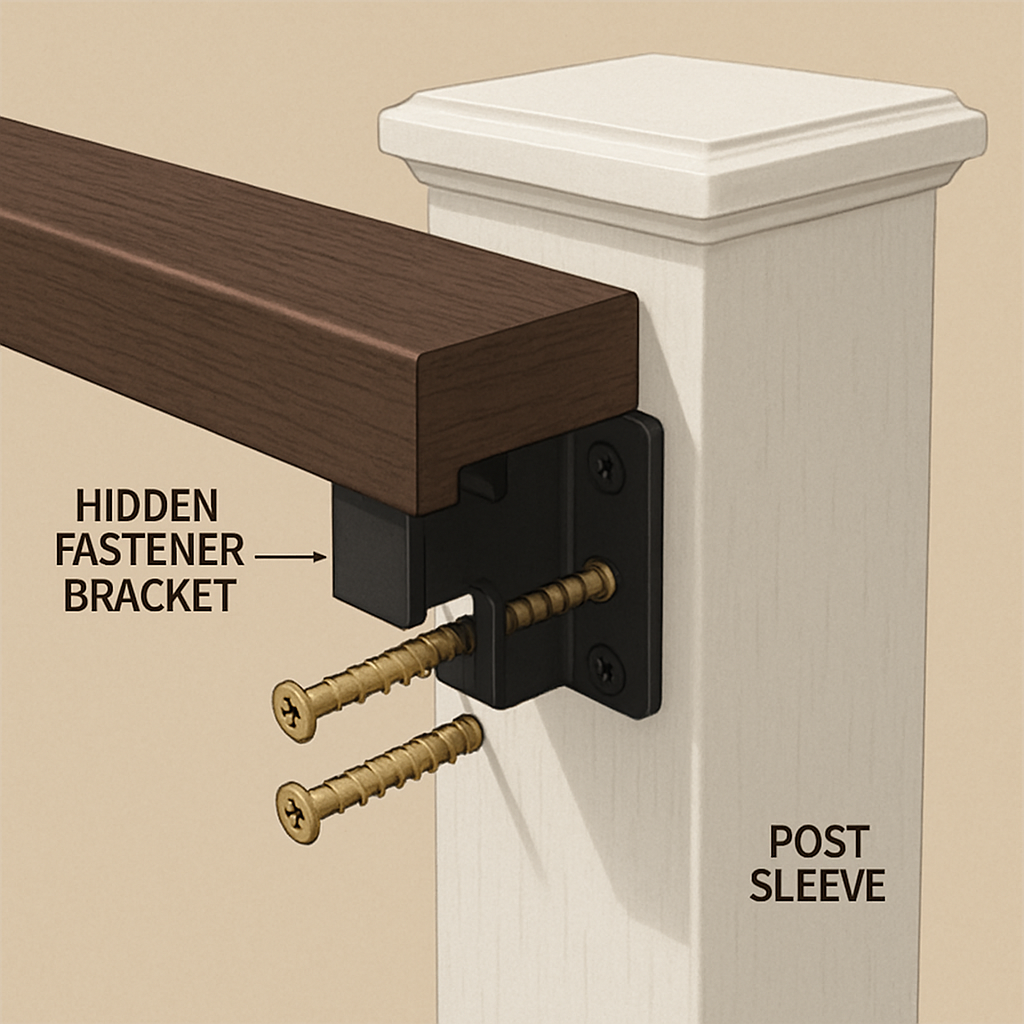
The secret to this straightforward setup involves post sleeves. Rather than building a beautifully finished pillar from scratch, you simply slide a hollow composite railing sleeve directly over your existing structural 4×4 wooden posts. This acts like a protective suit of armor, instantly hiding splintering lumber while utilizing the wood’s core strength to keep your deck safe.
Once those outer sleeves are secure, installing hidden fastener railing systems becomes your final milestone.
These specialized brackets attach horizontal rails using screws that completely disappear behind seamless covers. Because they also allow the material to safely shift as seasonal temperatures fluctuate, they naturally introduce the concept of a “breathing” deck.
Solving the ‘Breathing’ Deck: Thermal Expansion Explained
Just as a wooden front door often sticks during hot summers, outdoor materials also naturally shift. This movement is called thermal expansion in wood-plastic composites, where the unique blend of fibers and plastics slightly swells in the heat and shrinks in the cold.
Because these components fluctuate, leaving proper gap spacing between your rails and posts during installation is absolutely vital. If a composite handrail is jammed tightly against a surface, that trapped summer heat will eventually force the rigid boards to warp or buckle under pressure.
Modern composite railing systems solve this problem by using specialized brackets with built-in tolerance to safely absorb the shifting. Letting the structure breathe protects your investment for decades, ensuring your focus remains on enjoying your yard and building an eco-friendly outdoor space.
Building an Eco-Friendly Outdoor Space
When you admire a modern composite railing, you are actually looking at diverted landfill waste. The secret recipe relies heavily on post-consumer recycled content—think everyday plastic grocery bags blended perfectly with reclaimed sawdust. Choosing this eco-friendly recycled fencing means zero new trees are chopped down just to secure your deck’s perimeter.
True sustainability also means building things that actually last. Because these durable composite staircase fences resist rotting and splintering, they stay safely attached to your home instead of ending up in a local dump ten years later. With the environmental and performance benefits now clear, it is time to explore a practical plan for choosing the right system.
Your 3-Step Plan for Choosing the Right Composite System
You no longer have to look at your outdoor space and see a grueling weekend of sanding ahead. By upgrading to composite railing, you are trading future chores for peace of mind, knowing that your initial investment quickly pays for itself in reclaimed free time and avoided maintenance.
To ensure your deck upgrade proceeds smoothly, use this simple checklist before ordering materials:
Measure your footprint: Calculate the exact linear footage of your deck.
Check local codes: Verify the required rail heights for your neighborhood.
Order color samples: Test how different composite deck railing kits look against your siding in natural light.
With these fundamentals, you are equipped to make a confident, lasting choice. Whether you tackle a weekend DIY install or hire a local pro, your next step brings you closer to a beautiful, splinter-free backyard built for relaxing rather than working.
Newsletter Updates
Enter your email address below and subscribe to our newsletter