Before You Go — Get BRAND BOA Updates Top Products, Shed Plans & Estimating Tips
Join homeowners, DIY builders & contractors
Subscribe to receive construction product recommendations, shed plan updates, BOQ tips, and useful buying guides for tools, materials, finishes, and building essentials. We’ll help you discover selected products from trusted USA suppliers and share practical ideas to plan, price, and build smarter.
When it comes to the longevity and structural integrity of a building, water is undoubtedly public enemy number one. Even the smallest breach in a building’s exterior envelope can lead to insidious leaks, toxic mold growth, and catastrophic structural rot over time. This is exactly where the unsung hero of the construction world steps in: aluminum flashing.
Acting as an impenetrable shield at the most vulnerable intersections of a building—such as valleys, chimneys, windows, and doors—aluminum metal flashing prevents moisture from infiltrating your home. In this comprehensive guide, we are going to explore why this versatile material is the top choice for contractors and builders, and how to utilize it effectively to keep your structures bone-dry for decades.
Why Choose Aluminum Over Other Materials?
Walk down the roofing aisle of any major hardware store, and you will see an array of weatherproofing options. From traditional tin flashing rolls to modern synthetics, the choices are vast. However, aluminum roll flashing remains the gold standard for several compelling reasons.
Durability and Weather Resistance
One of the primary reasons builders reach for aluminum is its inherent ability to withstand the elements. When you examine galvanized steel versus prefinished coil aluminum, the differences become clear. Galvanized steel is strong but relies on a zinc coating; if that coating is deeply scratched or cut, the exposed steel will rapidly rust. Conversely, aluminum does not rust. Even the natural corrosion resistance of mill finish aluminum is exceptional because it instantly forms a microscopic layer of aluminum oxide when exposed to air, which halts further degradation.
Additionally, when looking at window and door installations, the benefits of metal over vinyl for windows are stark. Vinyl flashing can become brittle and crack in freezing temperatures, and it degrades under prolonged UV exposure. Aluminum, on the other hand, easily withstands extreme temperature fluctuations without cracking, warping, or losing its structural integrity.
Outstanding Workability
Another massive advantage of aluminum is how easy it is to manipulate on the job site. It offers incredible malleability for custom roof valleys, allowing roofers to press and mold the metal precisely into the contours of the roof decking.
If you are fabricating custom pieces, you will appreciate how effortlessly it bends. Bending metal with a sheet brake creates crisp, clean, and rigid angles that hold their shape indefinitely, which is essential for creating custom drip edges or window caps. Furthermore, cutting thin gauge metal sheets of aluminum requires nothing more than a standard pair of aviation snips, making it a highly accessible material for both seasoned professionals and DIY enthusiasts.
Essential Roofing Applications
The roof is your home’s first line of defense against the sky, and roll flashing plays a critical role in its defense system. Here are the key areas where aluminum flashing proves its worth.
Eaves and Rakes
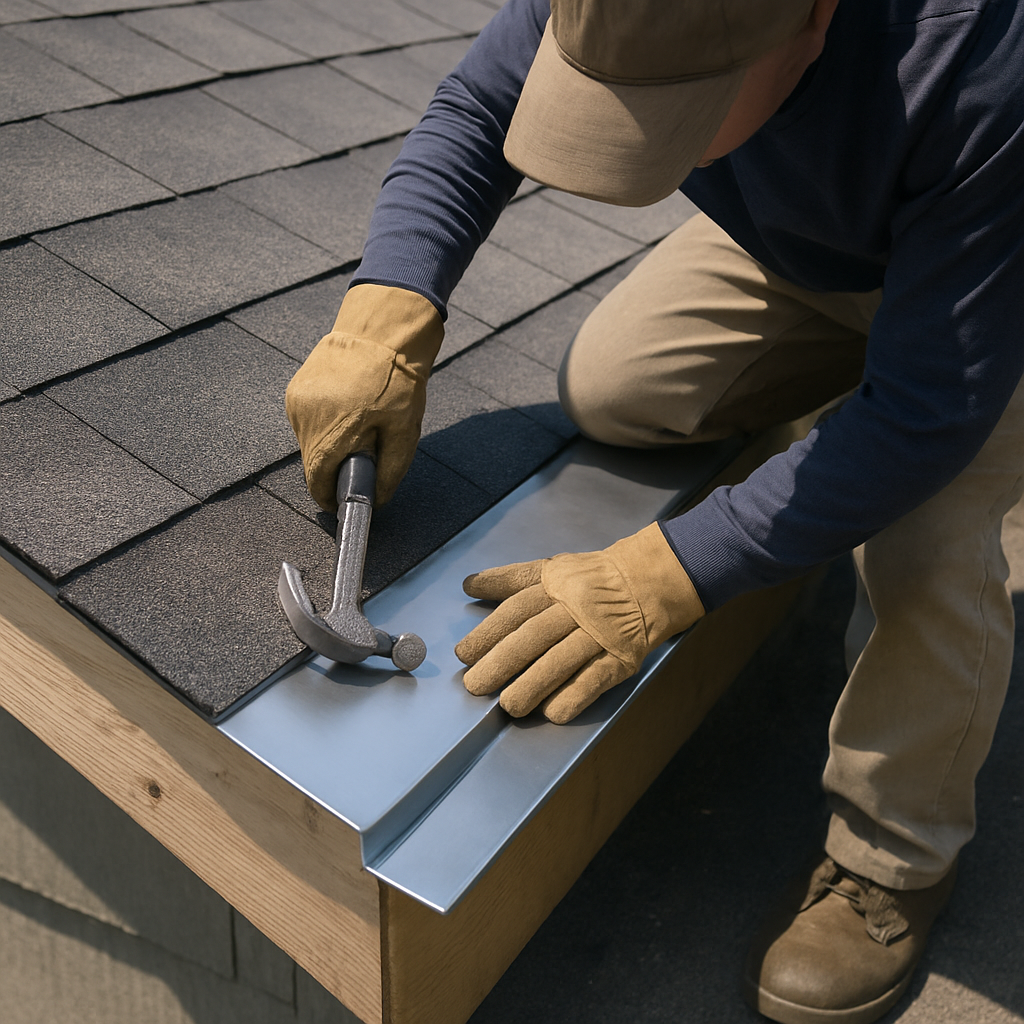
The edge of your roof takes a beating during rainstorms. Installing drip edge on roof eaves and rakes is a non-negotiable step in modern roofing. This specialized L-shaped or T-shaped flashing directs water away from the vulnerable wooden fascia boards and ensures that runoff drops cleanly into the gutters rather than curling back under the shingles to rot the roof deck.
Roof Valleys
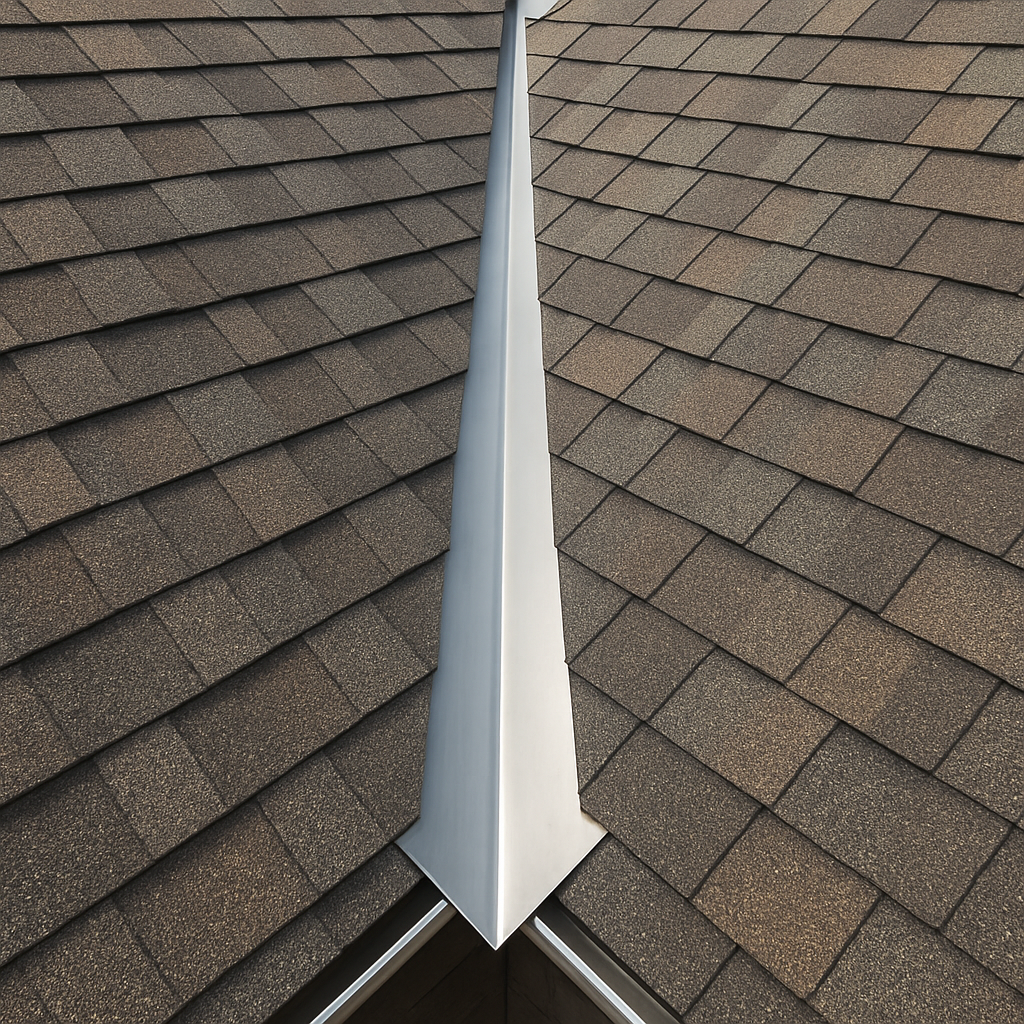
Where two roof planes intersect, water collects and flows in heavy volumes. This intersection requires a continuous, seamless channel. When selecting your materials, it is important to understand the standard roll valley thickness. While general-purpose flashing might be around 0.014 inches thick, a roof valley requires a heavier gauge—typically 0.019 to 0.024 inches thick—to withstand the heavy, concentrated flow of water, ice, and debris.
Chimneys and Skylights
Roof penetrations are notorious for leaking. Sealing chimney transitions correctly requires a multi-layered approach. The process involves laying a base flashing (apron), followed by intricate step flashing along the sloped sides. Proper step flashing installation techniques dictate that each piece of L-shaped metal is interwoven with each individual course of shingles, creating a cascading effect that forcefully directs water out and over the roof covering, rather than beneath it.
Wall, Window, and Door Protection
Aluminum flashing isn’t just for roofs; it is equally critical for protecting the vertical surfaces of a building.
Defending Siding and Masonry
A major goal in exterior construction is preventing water damage behind siding. Even premium vinyl or fiber cement siding isn’t entirely waterproof. By integrating aluminum flashing at intersections where siding meets a roofline or a different material, builders ensure that any trapped moisture is directed back to the outside.
For brick and stone homes, contractors rely on counter flashing for masonry walls. This technique involves cutting a shallow groove (a reglet) into the mortar joint. The folded top edge of the aluminum flashing is inserted into this groove and sealed with masonry caulk. The flashing then drops down to cover the step flashing below it, ensuring that water running down the face of the brick cannot slip behind the roof flashing.
Securing Windows and Doors
Every opening cut into a wall is a potential entry point for rain. Weatherproofing exterior door headers and window frames is typically achieved by installing Z-flashing (or head flashing). This aluminum profile sits directly on top of the door or window trim, sliding securely behind the house wrap and siding above it. If water runs down the siding, it hits the Z-flashing and is pushed safely away from the window frame.
Crucial Mistakes to Avoid: Chemical Reactions
While aluminum metal flashing is a wonder material, it does have a kryptonite: specific chemical reactions. An expert installer must be aware of what materials aluminum is touching, as incompatible materials will eat away at the metal over time.
Beware of Treated Lumber
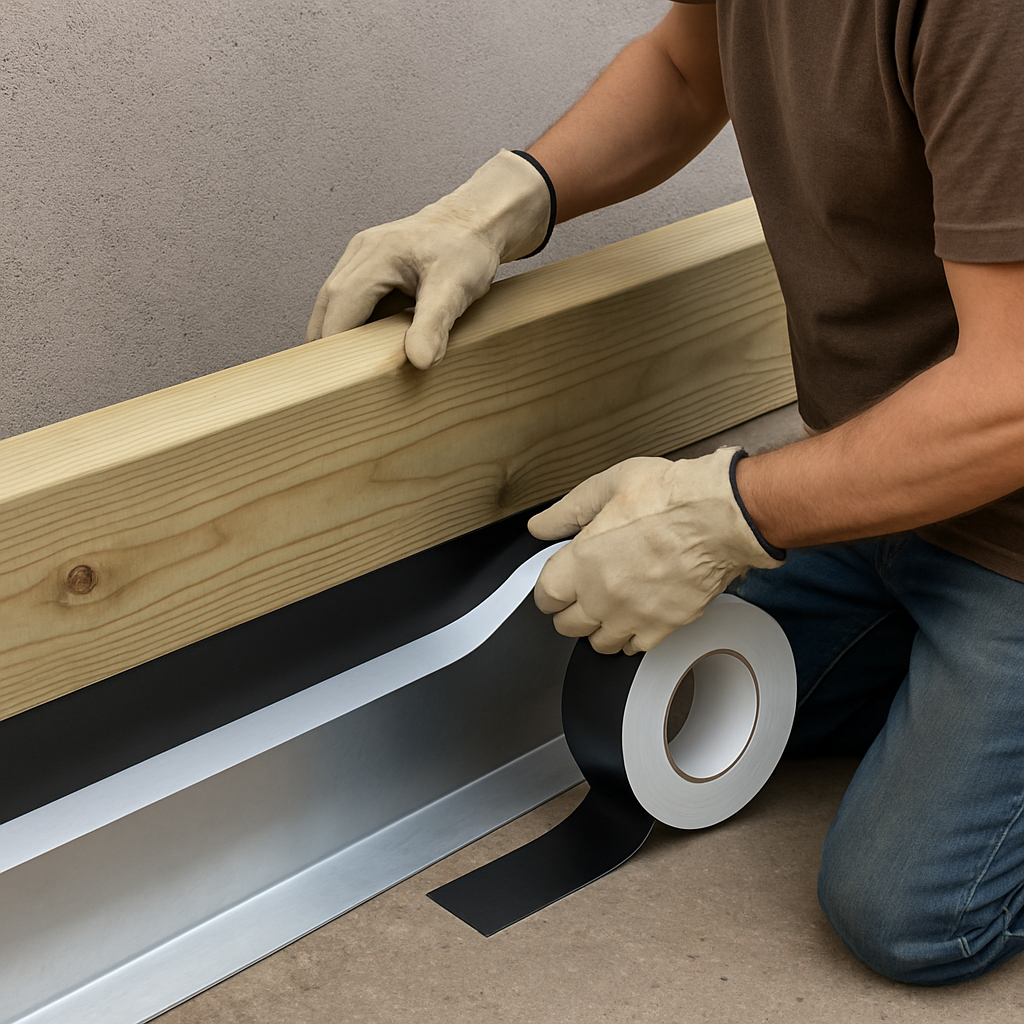
One of the most common and devastating mistakes is ignoring the metal reaction with pressure treated lumber. Modern treated wood (such as ACQ or copper azole) contains high levels of alkaline chemicals and copper to prevent termite and fungal decay. When an aluminium flashing roll is placed in direct contact with this treated wood, moisture acts as a catalyst, and the chemicals will rapidly corrode the aluminum, turning it into a brittle, powdery mess within just a few years.
Actionable Tip: Always create a barrier between pressure-treated wood and aluminum. You can use a layer of self-adhering bituminous flashing tape or heavy building paper to separate the two materials.
Galvanic Corrosion
Similarly, builders must prevent the electrolytic reaction between dissimilar metals. This scientific phenomenon, also known as galvanic corrosion, occurs when two different types of metal come into physical contact in the presence of an electrolyte (like rainwater). For instance, if you use copper nails to secure aluminum flashing, or if water runs off a copper roof onto an aluminum valley, the aluminum will act as an anode and rapidly corrode.
Actionable Tip: Always use fasteners that match your flashing. Secure aluminum flashing with aluminum or high-quality stainless-steel nails to prevent galvanic corrosion from compromising your waterproofing efforts.
A Quick Buying Guide: Choosing the Right Metal Flashing Rolls
When you visit a building supply yard, you will be confronted with dozens of metal flashing rolls. How do you choose the right one?
Understand Width Requirements: Roll flashing comes in widths ranging from 4 inches to 24 inches or more. Narrow rolls are great for wall transitions and drip edges, while wider rolls (14 to 24 inches) are essential for roof valleys and custom fabrication.
Gauge (Thickness): As mentioned earlier, do not skimp on thickness for high-wear areas. Use light gauge (0.014″) for basic trim, and heavy gauge (0.019″ to 0.024″) for valleys and structural transitions.
Finish: You can purchase raw mill finish aluminum, which has a shiny, silver look, or prefinished coil. Prefinished rolls are coated with durable paint baked onto the metal, offering a dual benefit of aesthetic color-matching (e.g., matching your roof, trim, or siding) and an extra layer of protection against the elements.
Conclusion
Building a structure that can survive decades of harsh weather requires more than just good framing and high-quality shingles; it requires an unwavering attention to the details of moisture management. Aluminum flashing remains one of the most cost-effective, durable, and workable materials available to modern builders.
Whether you are skillfully utilizing its malleability for complex roof intersections, carefully weatherproofing door headers, or meticulously step-flashing a chimney, using aluminum roll flashing guarantees that water stays exactly where it belongs: outside. By understanding the proper installation techniques and respecting the material’s chemical boundaries, you can ensure your construction projects remain safe, dry, and structurally sound for generations to come.
Newsletter Updates
Enter your email address below and subscribe to our newsletter