Before You Go — Get BRAND BOA Updates Top Products, Shed Plans & Estimating Tips
Join homeowners, DIY builders & contractors
Subscribe to receive construction product recommendations, shed plan updates, BOQ tips, and useful buying guides for tools, materials, finishes, and building essentials. We’ll help you discover selected products from trusted USA suppliers and share practical ideas to plan, price, and build smarter.
Whether you are building a new house or renovating an older property, the exterior details make all the difference. For decades, traditional wood was the undisputed king of home exteriors. However, anyone who has spent their weekends scraping, sanding, and repainting peeling wood knows that it is a labor-intensive material. Today, modern engineering has given us a superior alternative.
If you are looking for the ultimate solution for low maintenance home exterior finishing, it is time to look beyond traditional lumber. Today, composite trim boards are revolutionizing the construction and remodeling industries.
In this comprehensive guide, we will explore exactly why these innovative materials are taking over, how they compare to traditional options, and how you can seamlessly incorporate them into your next project.
What Are Composite Trim Boards?
At their core, composite trim boards are manufactured building materials designed to mimic the look and feel of real wood without the inherent vulnerabilities. While traditional wood absorbs moisture, invites termites, and warps under the sun, modern synthetic boards are engineered to withstand the harshest elements.
When we talk about composite materials in construction, we are usually referring to a few distinct categories:
Cellular PVC: Made entirely of polyvinyl chloride, this material is filled with millions of microscopic air bubbles, giving it the density and workability of white pine.
Wood-Plastic Composites (WPC): A blend of recycled plastic and wood fibers.
Polyurethane Architectural Millwork: Often used for highly detailed, decorative trim pieces like corbels, intricate crown molding, and crossheads. It is lightweight, structurally stable, and highly customizable.
When evaluating fiber cement vs wood plastic composites or cellular PVC for your exterior trim, it generally comes down to your specific needs. Fiber cement is incredibly fire-resistant and heavy, while PVC and WPCs are highly workable, completely impervious to water, and ideal for intricate detailing.
The Unmatched Benefits of Composite Trim
Transitioning from traditional lumber to composite trim offers a wealth of long-term benefits that will save you time, money, and stress.
1. Ultimate Weather and Moisture Resistance
The most significant advantage of using these synthetic boards is their absolute resistance to moisture. Traditional wood acts like a sponge, absorbing humidity and rain, which inevitably leads to swelling, cracking, and rot.
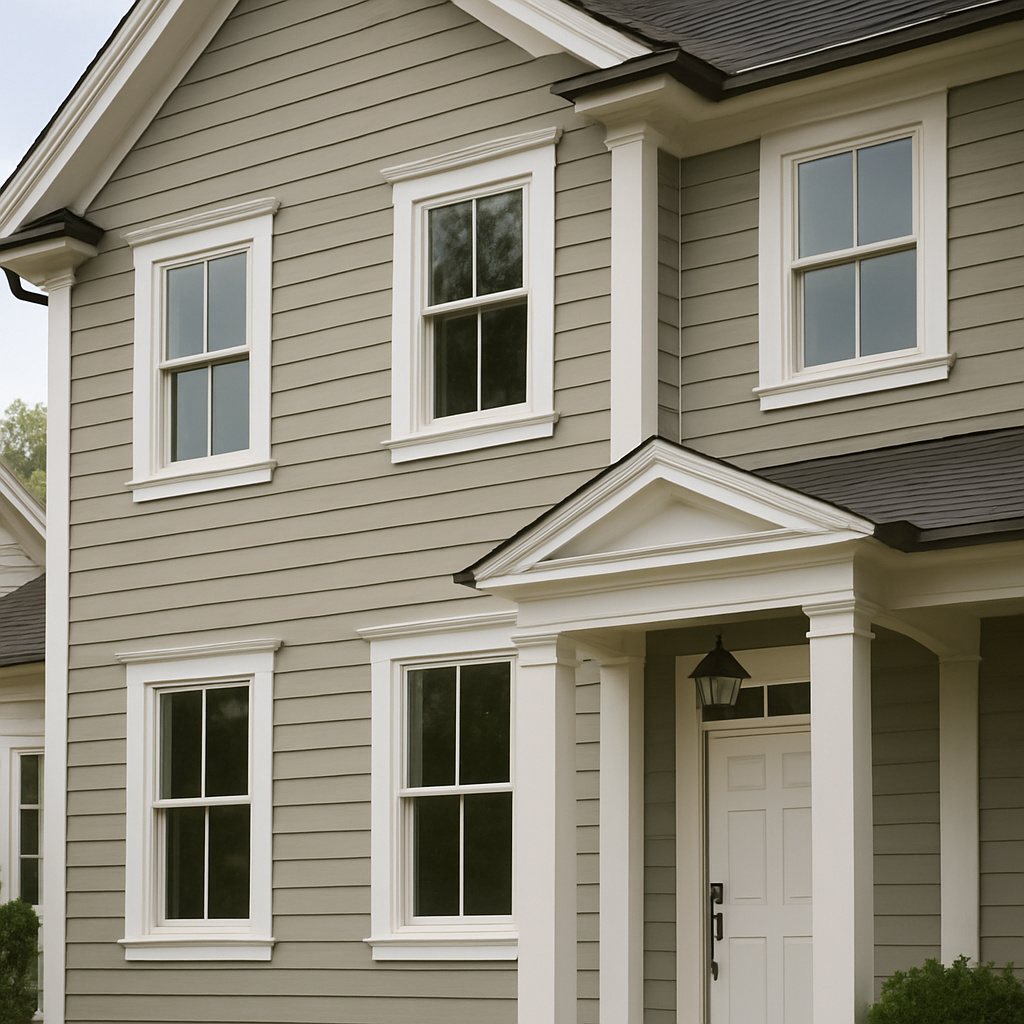
Composite trim boards, on the other hand, are completely waterproof. This makes them the absolute best choice for high-moisture areas. For example, using them as rot resistant exterior window casing ensures that the envelope of your home remains secure and leak-free for decades. Similarly, if the base of your entryways frequently suffers from water damage, using synthetic products as weatherproof door frame replacement materials will permanently solve the problem.
2. Exceptional Longevity and Low Maintenance
Your weekends should be spent relaxing, not precariously balancing on a ladder with a paintbrush. Maintaining cellular pvc molding and other composite trims is virtually effortless. Because these materials do not absorb moisture, they do not peel or blister paint. A simple annual wash with mild soap and a hose is usually all it takes to keep your outdoor trim looking brand new.
3. Favorable Long-Term Economics
When comparing pvc trim vs wood cost, it is true that the initial price tag of synthetic options can be 20% to 40% higher than standard pine or fir. However, this upfront investment quickly pays for itself.
With wood, you must factor in the recurring costs of primer, high-quality exterior paint, wood filler, and the eventual cost of replacing rotted boards. Because composite materials do not rot, splinter, or require constant repainting, their lifetime cost is significantly lower, making them an incredibly smart financial choice for any homeowner.
How to Work with and Install Composite Trim
One of the greatest appeals of these materials is that you do not need specialized tools to work with them. If you know how to work with wood, you generally know how to install exterior plastic trim. However, there are a few unique considerations to keep in mind to guarantee a flawless finish.
Cutting and Shaping
Trimming, cutting and routing synthetic lumber requires the exact same standard woodworking tools you already own. Standard miter saws, table saws, and routers will cut cleanly through the material.
Pro Tip: Use carbide-tipped blades with fewer teeth to prevent friction buildup, which can melt the plastic rather than cutting it cleanly.
Managing Expansion and Contraction
Unlike wood, which expands and contracts across its width due to moisture, synthetic boards expand and contract along their length due to temperature changes.
Preventing expansion and contraction in synthetic boards from ruining your trim installation requires two things: proper fastening and proper joint techniques. Never use a standard butt joint for long runs. Instead, cut your boards at a 45-degree angle (a scarf joint) and glue the joint together using specialized PVC cement. This forces the boards to move as a single unit, pushing the expansion out to the ends of the run where it is less noticeable.
Fastening Systems
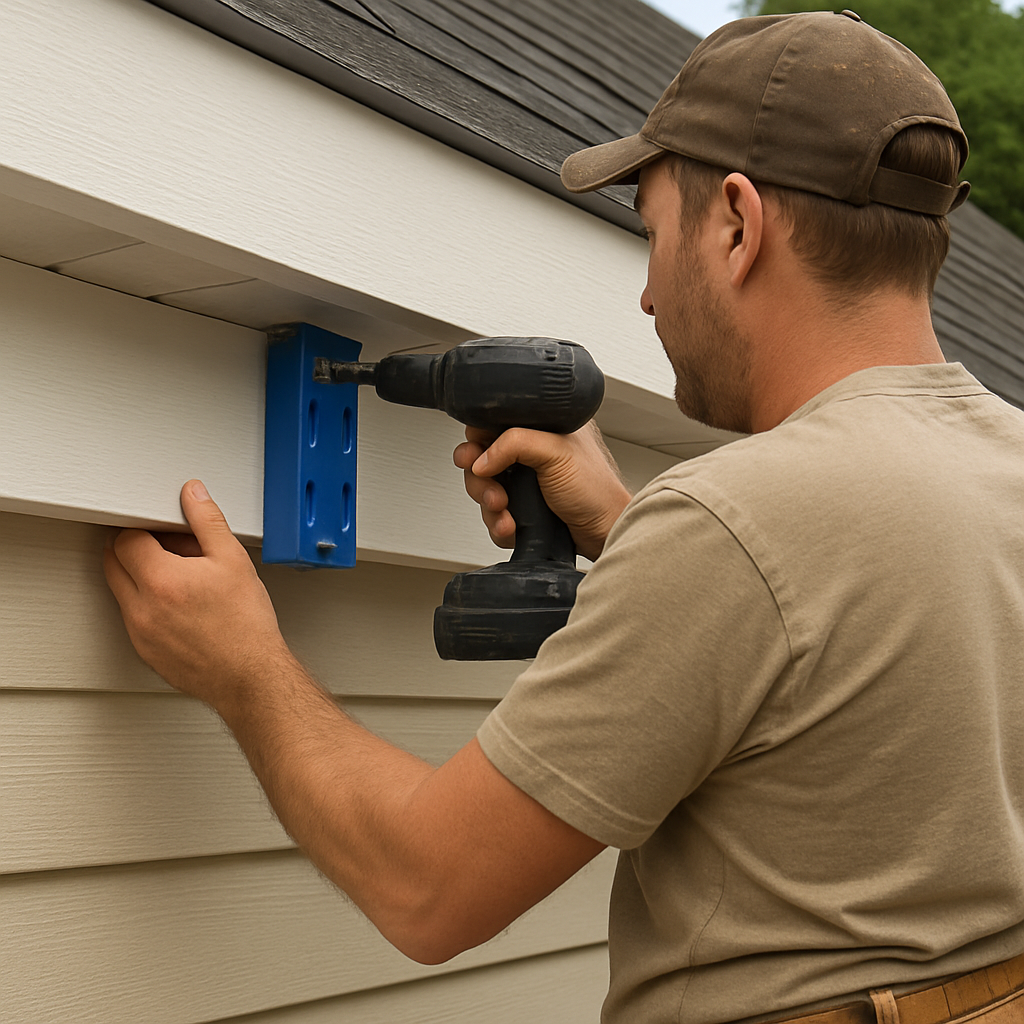
Because synthetic boards expand with heat, they require robust fastening. Do not use standard nails, as the boards can easily pull them out over time. Instead, use stainless steel or hot-dipped galvanized screws.
If you want a truly premium, seamless look, utilize hidden fastening systems for house fascia and trim. These systems typically involve driving a specialized screw below the surface of the trim boards and tapping a perfectly matched composite plug into the hole, rendering the fastener completely invisible.
Sealing and Joining
When your boards meet siding, brick, or other trim pieces, sealing gaps in exterior synthetic trim is crucial for both aesthetics and insulation. Always use a high-quality, exterior-grade polyurethane or advanced polymer sealant. Avoid standard silicone, as it does not adhere well to the slick surface of PVC and composite materials.
Painting and Staining: Customizing Your Exterior
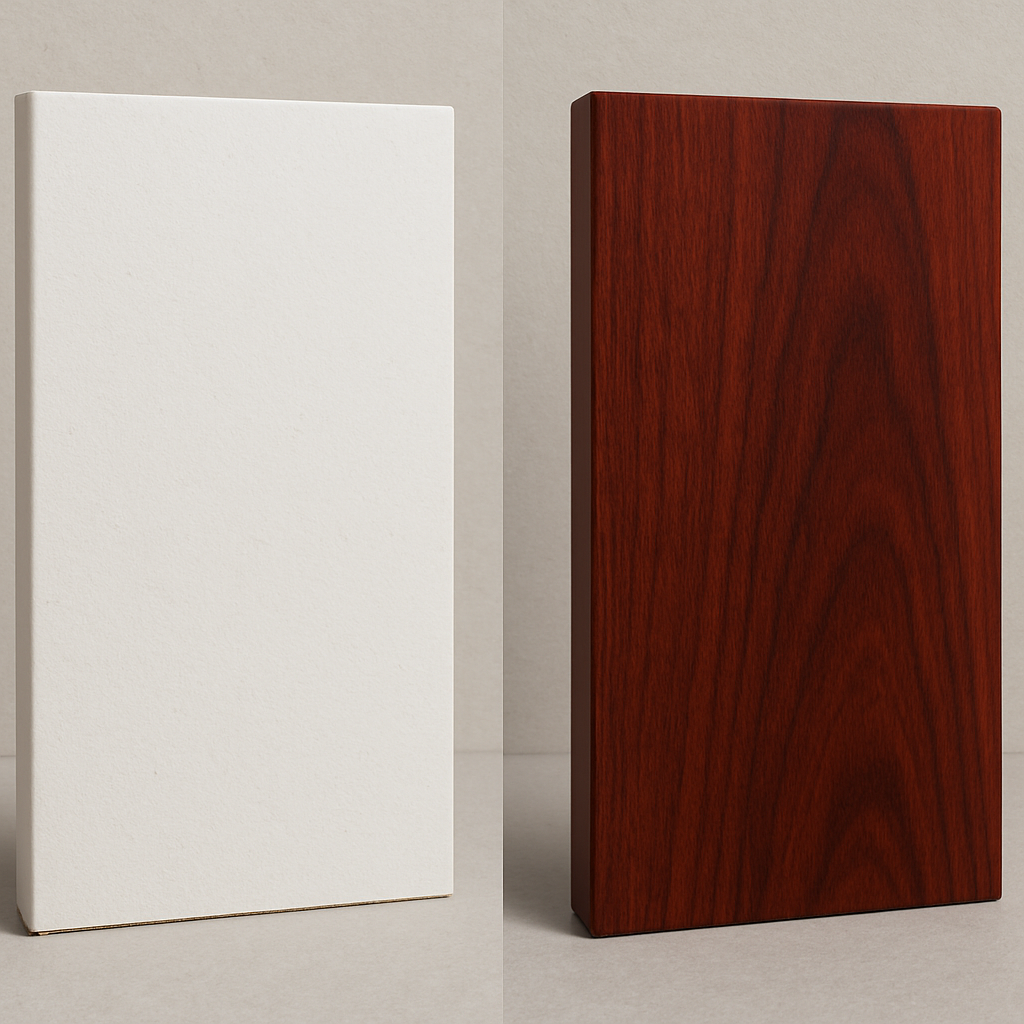
A common misconception is that composite and PVC boards only come in stark white and cannot be customized. While the crisp white look is highly sought after, you can absolutely customize the color to match your home’s design.
Painting Composite Boards
If you decide to paint, you must be mindful of the paint’s formulation and color. The best paint for engineered wood trim and PVC is a 100% acrylic latex paint.
Crucial Warning: You must pay attention to the paint’s Light Reflective Value (LRV). Dark colors absorb massive amounts of heat from the sun. If you paint a PVC board black or dark navy, it will absorb so much heat that the plastic will warp, distort, and potentially pull away from the wall. Always choose a paint color with an LRV of 55 or higher (lighter colors). If you absolutely must use a dark color, you have to purchase specialized “vinyl-safe” paints formulated to reflect infrared light and minimize heat absorption.
Can You Stain Cellular PVC Boards?
A question many homeowners ask is: can you stain cellular pvc boards to look like real mahogany or cedar? The answer is yes, but not with traditional wood stain. Because cellular PVC has no natural pores to absorb a traditional penetrating stain, you must use specialized PVC stain kits.
These kits use an opaque base coat combined with a specialized gel graining coat. By applying the gel with a graining tool or stiff brush, you can create incredibly realistic faux-wood textures that fool the eye while retaining all the weatherproof benefits of synthetic lumber.
Creative Applications to Elevate Your Home
The versatility of synthetic exterior trim extends far beyond simple window frames. Because it can be easily bent (using heat blankets) and routed, builders are using it in highly creative ways.
Cellular PVC Column Wraps: Old, splitting wooden porch columns can easily be revitalized. Pre-manufactured or custom-built cellular PVC column wraps can be installed seamlessly around existing structural posts, instantly adding massive curb appeal without requiring structural changes.
Custom Soffits and Beadboard: Replace rotting porch ceilings with composite beadboard for a classic, southern-style aesthetic that will never succumb to mildew or dampness.
Decorative Brackets and Corbels: Using polyurethane architectural millwork, you can add Victorian or Craftsman-style architectural details to your rooflines and eaves without adding heavy weight to your home’s exterior.
Conclusion
Choosing the right materials for your home’s exterior is an investment in the property’s future value, structural integrity, and your own peace of mind. By making the switch to composite trim boards, you are effectively eliminating the cycle of rot, repair, and repainting.
From flawlessly trimmed windows and weatherproof door frames to beautiful architectural millwork, synthetic materials offer the perfect marriage of timeless aesthetic appeal and modern engineering. Whether you are hiring a professional or tackling a DIY project, investing in composite trim is a surefire way to protect and beautify your home for a lifetime.
Newsletter Updates
Enter your email address below and subscribe to our newsletter