Before You Go — Get BRAND BOA Updates Top Products, Shed Plans & Estimating Tips
Join homeowners, DIY builders & contractors
Subscribe to receive construction product recommendations, shed plan updates, BOQ tips, and useful buying guides for tools, materials, finishes, and building essentials. We’ll help you discover selected products from trusted USA suppliers and share practical ideas to plan, price, and build smarter.
Every homeowner knows that water is the ultimate enemy of a solid foundation. Without a proper way to channel rainwater away from your roof and walls, your home is left vulnerable to structural damage, mold, and landscape erosion. This is where high-quality rain gutters come into play, and more specifically, the unsung hero of the setup: the aluminum downspout.
Whether you are upgrading an old system or building a new home, understanding the components that effectively manage water runoff is crucial. In this comprehensive guide, we will explore why an aluminum downspout is the superior choice for your home, how to optimize your setup, and practical maintenance tips to keep your water management system flowing smoothly year-round.
Why Aluminum is the Ultimate Material for Gutter Systems
When planning a residential rainwater drainage system installation, the materials you choose will dictate the lifespan and efficiency of your setup. Homeowners are often faced with a dizzying array of options, but aluminum consistently ranks at the top.
Comparing Metal Versus Vinyl Gutter Systems
When comparing metal versus vinyl gutter systems, the differences in longevity and performance become immediately apparent. Vinyl is inexpensive and easy to cut, but it expands and contracts significantly with temperature changes. Over time, this thermal cycling causes vinyl to crack, warp, and leak.
On the other hand, aluminum gutters offer remarkable resilience. They are immune to the cracking issues that plague vinyl and, unlike steel, they will never rust. This makes aluminum the “Goldilocks” standard for exterior drainage—tough enough to withstand harsh weather but adaptable enough for complex architectural designs.
Heavy Duty vs Lightweight Gutter Materials
Finding the perfect balance between strength and weight is essential for both the structural integrity of your roofline and the ease of labor. When evaluating heavy duty vs lightweight gutter materials, aluminum hits the sweet spot. It is incredibly lightweight, which makes downspout installation much safer and faster for contractors and DIY enthusiasts alike. Despite its light weight, modern extruded aluminum is impressively rigid and can easily bear the weight of heavy snow loads or torrential downpours without buckling.
The Beauty of Corrosion Resistant Powder Coated Exterior Finishes
One of the most significant advantages of an aluminum gutter downspout is its aesthetic longevity. High-quality aluminum components are treated with corrosion resistant powder coated exterior finishes. This baking process bonds the color securely to the metal, meaning your downspouts will not peel, chip, or fade under intense UV rays. Whether you want a classic white to match your trim or a deep bronze to complement a rustic exterior, powder-coated aluminum ensures your home looks pristine for decades.
Maximizing Efficiency: Sizing and Design
Choosing aluminum is only the first step. To ensure your gutter systems function flawlessly, you must pay close attention to the size and design of your drainage components.
Seamless vs Sectional Drainage Components
When upgrading your home’s exterior, you will likely encounter the debate over seamless vs sectional drainage components. Sectional gutters and downspouts are sold in pre-cut lengths and linked together with connectors. While cheaper, every seam is a potential weak point where leaks can form or debris can snag.
Conversely, seamless gutters are custom-rolled on-site to perfectly match the length of your roof. While downspouts inherently have a few seams at the elbow joints, pairing a high-quality aluminum downspout with a seamless horizontal gutter greatly reduces the overall number of failure points in your system, ensuring a smoother flow of water.
Getting the Sizing Right
Even the best materials will fail if they cannot handle the volume of water cascading off your roof during a storm.
K-style gutter leader pipe sizing: K-style gutters are the most popular choice for modern residential homes due to their decorative crown-molding appearance and high water capacity. However, they must be paired with appropriately sized leader pipes (downspouts). A standard 5-inch K-style gutter typically requires a 2×3-inch downspout, while a larger 6-inch gutter demands a 3×4-inch downspout to prevent overflow.
Measuring downspout diameter for maximum water flow: If your home is located in an area prone to heavy, sudden downpours, or if you have a steeply pitched roof that sheds water rapidly, measuring downspout diameter for maximum water flow is a critical step. Upgrading from a standard 2×3-inch to an oversized 3×4-inch aluminum downspout can nearly double the drainage capacity, drastically reducing the risk of water backing up into your eaves.
Installation and Secure Fastening
A drainage system is only as reliable as the hardware holding it in place. Proper downspout installation requires attention to detail and the right fastening tools.
Securing the System to Your Home
Wind, heavy rain, and accidental impacts can easily dislodge a poorly secured downspout. To ensure your aluminum downspout stays firmly against the side of your house, proper bracket spacing is mandatory.
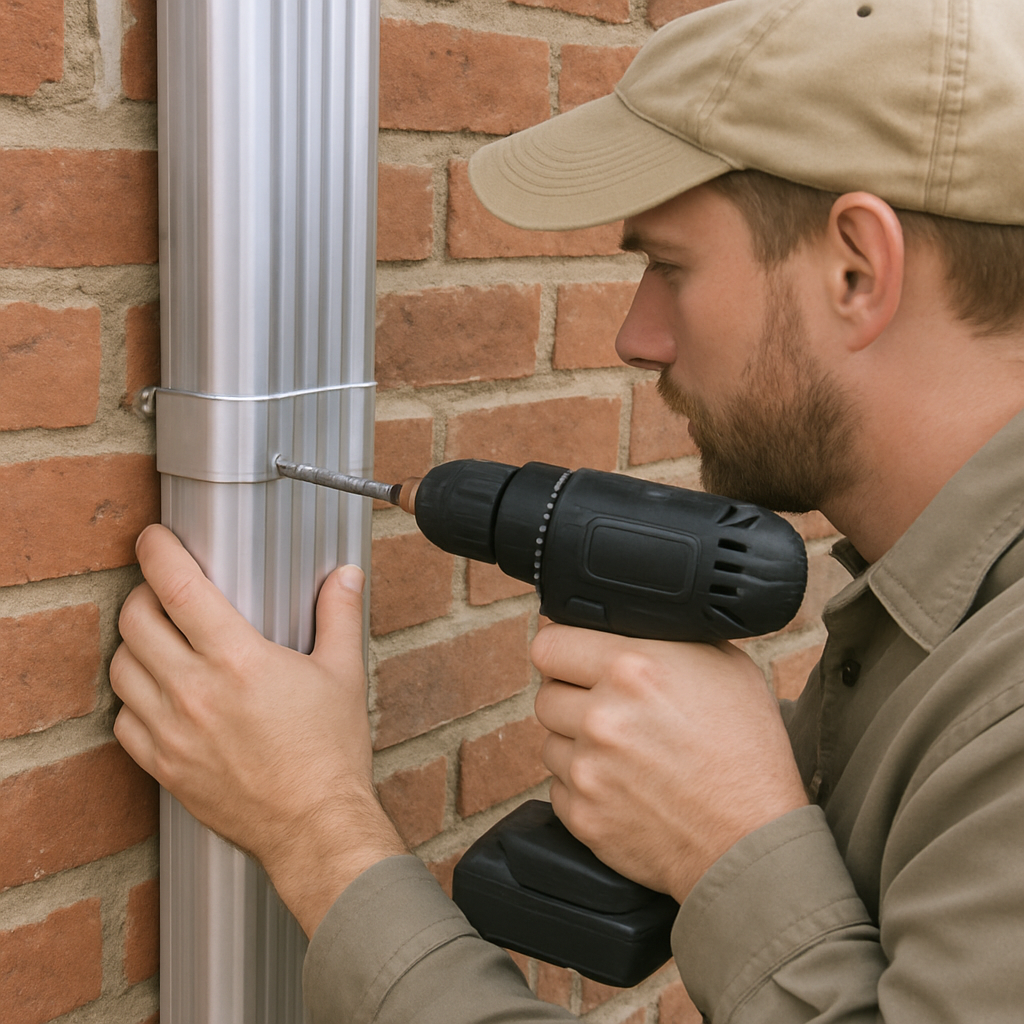
You should utilize high-quality downspout clips and masonry wall fasteners, especially if your home features a brick or stone exterior. Masonry fasteners require drilling a pilot hole into the mortar or brick and using anchors that expand to create a lock-tight grip. For best results, place a clip every 10 feet, ensuring there is always one near the top, one at the bottom, and one in the middle of standard one-story runs.
Maintenance, Troubleshooting, and Repairs
Even a premium aluminum setup requires occasional maintenance. Fortunately, the resilient nature of aluminum makes these tasks straightforward.
Fixing Leaking Elbow Joints and Connectors
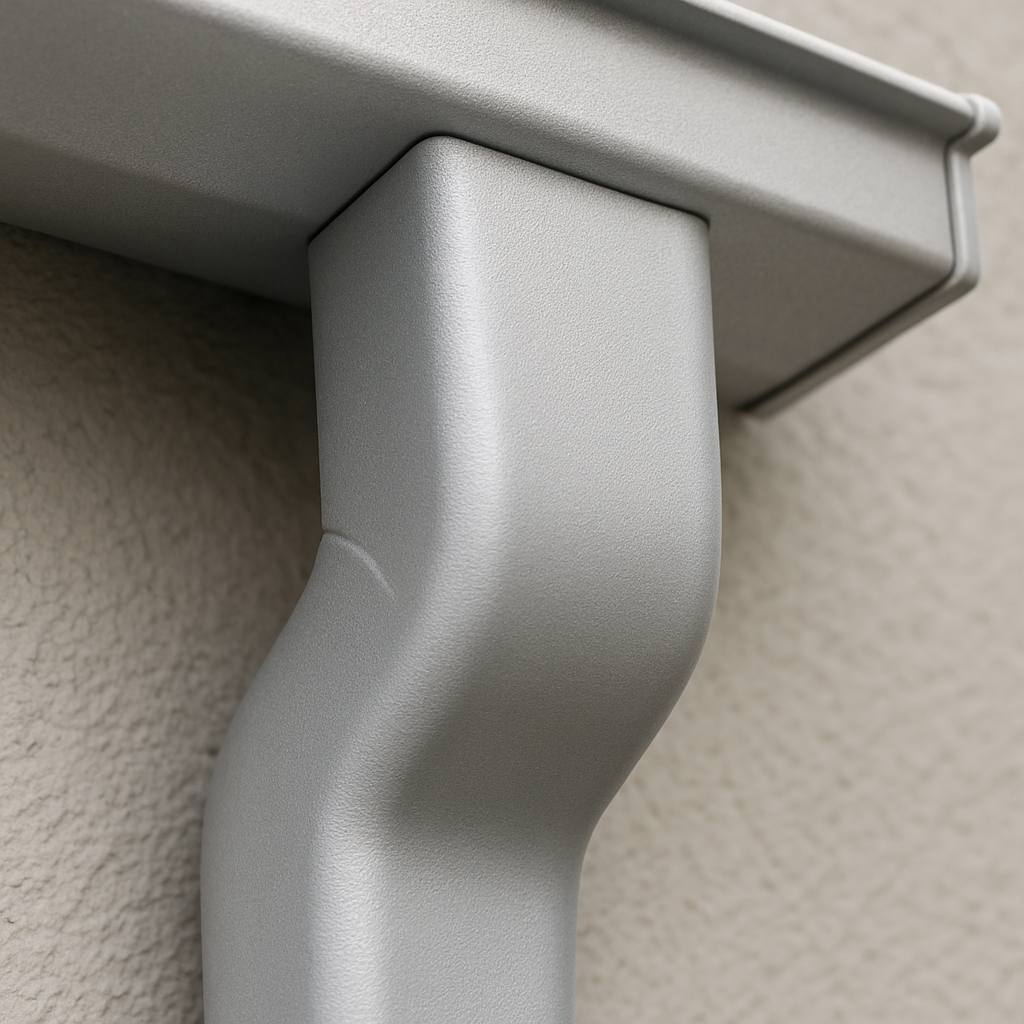
Because downspouts must zig-zag from the roofline to the wall, elbow joints are necessary. These joints are the most common areas for minor leaks to develop. Fixing leaking elbow joints and connectors is a simple process:
Clean the inside and outside of the joint thoroughly to remove dirt and algae.
Allow the aluminum to dry completely.
Apply a generous bead of high-quality, exterior-grade polyurethane gutter sealant to the inside of the seam.
For added security, install aluminum pop rivets to hold the joint tightly together while the sealant cures.
How to Clear Clogged Vertical Drainage Pipes
Fall foliage and spring blossoms can quickly turn into a sludgy mess inside your drainage system. Knowing how to clear clogged vertical drainage pipes will save you from expensive water damage.
The Tap Method: Tap along the outside of the aluminum downspout with a screwdriver handle. A dull thud will tell you exactly where the clog is located.
The Hose Method: Feed a garden hose up from the bottom of the downspout and turn the water on full blast to dislodge the debris upward.
The Plumber’s Snake: For stubborn clogs, a standard handheld plumber’s snake can be fed into the top of the downspout to break apart compacted leaves and twigs.
Step-by-Step Gutter Outlet Replacement Guide
The outlet (or drop) is the piece that connects the horizontal gutter to the vertical downspout. If this piece becomes damaged, it can restrict water flow. Here is a quick step-by-step gutter outlet replacement guide:
Detach the downspout: Remove the screws connecting the top elbow of the downspout to the old outlet.
Remove the old outlet: Drill out the rivets or unscrew the fasteners holding the old drop outlet in the gutter trough.
Clean the opening: Scrape away old sealant and wipe the bare aluminum clean with a solvent.
Insert the new outlet: Drop the new aluminum outlet into the hole.
Seal and secure: Apply gutter sealant generously around the flange of the new outlet inside the gutter. Secure it in place with fresh aluminum rivets, and reattach the downspout.
Enhancing Your Drainage System
To truly get the most out of your aluminum gutter downspout, consider integrating a few smart accessories. These additions protect your property and can even help the environment.
Shielding Your Foundation
The primary goal of any gutter system is to move water safely away from your home’s structural base.
Prevent basement flooding with downspout extensions: Water pooling at the base of your downspout will eventually seep into foundation cracks. You can easily prevent basement flooding with downspout extensions. These attachments carry water 3 to 6 feet further out into your yard, safely past the backfill zone of your foundation.
Splash block placement for foundation protection: If you choose not to use pipe extensions, strategic splash block placement for foundation protection is vital. Ensure the splash block slopes sharply away from the house and is positioned exactly under the downspout’s elbow so that high-velocity water does not dig a trench into your landscaping.
Upgrading with Smart Accessories
Leaf guard compatibility for debris prevention: To minimize the amount of time you spend on ladders clearing clogs, ensure your system has proper leaf guard compatibility for debris prevention. Aluminum gutters and downspouts pair beautifully with micromesh gutter guards, which keep leaves and pine needles out while pulling rainwater seamlessly into the trough.
Flexible downspout diverters for rain barrels: For the eco-conscious homeowner, capturing rainwater for garden use is a great way to lower utility bills. Aluminum downspouts can be easily modified to include flexible downspout diverters for rain barrels. These clever devices channel water into your collection barrel until it is full, and then automatically divert excess water back down the standard downspout path, preventing overflow.
Conclusion
Upgrading to an aluminum downspout is one of the most cost-effective, long-lasting improvements you can make to your home’s exterior. Thanks to its lightweight nature, immunity to rust, and beautiful corrosion-resistant finishes, aluminum vastly outperforms alternative materials. By ensuring proper sizing, securing the system with robust masonry fasteners, and utilizing smart additions like downspout extensions and rain diverters, you create an impenetrable defense against water damage.
Take the time to evaluate your current rainwater drainage system today. A proactive approach to your home’s water management will protect your foundation, preserve your landscaping, and give you ultimat
Newsletter Updates
Enter your email address below and subscribe to our newsletter