Before You Go — Get BRAND BOA Updates Top Products, Shed Plans & Estimating Tips
Join homeowners, DIY builders & contractors
Subscribe to receive construction product recommendations, shed plan updates, BOQ tips, and useful buying guides for tools, materials, finishes, and building essentials. We’ll help you discover selected products from trusted USA suppliers and share practical ideas to plan, price, and build smarter.
You see them every day—on your house, lining park paths, or shaping old factory chimneys. Because they are so ubiquitous, people naturally ask, are all bricks made of mud? While early builders used simple riverbed muck, architectural history reveals that modern masonry demands far more. Today’s blocks are actually carefully engineered mineral composites.
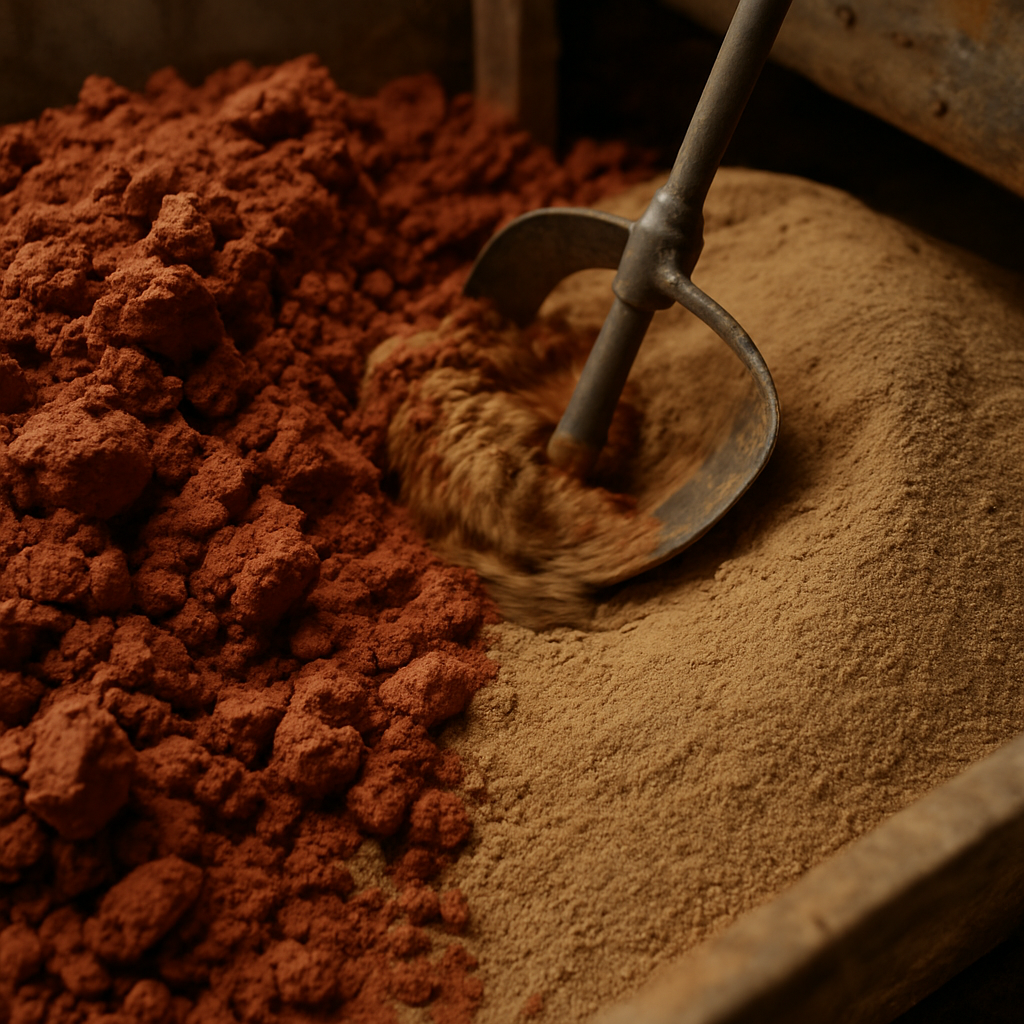
Think of this material like a loaf of bread. If you ask a seasoned mason about their craft, they will detail a recipe that has remained remarkably consistent since Roman times. The raw materials for brick making—usually clay acting as the flexible “glue” and sand serving as the sturdy “skeleton”—are combined into a workable dough. This precise pairing is what gives a building its impressive lifelong durability and heat-retaining thermal mass.
Entering a massive oven called a kiln, this earthy mixture reaches a permanent point of no return. Extreme heat triggers a spectacular chemical change that permanently transforms soft earth into a rock-hard structural staple, while simultaneously creating their iconic coloring.
The Raw Ingredients: Why Clay is the ‘Glue’ and Silica is the ‘Skeleton’
Think of the dirt in your backyard after a rainstorm. While regular soil just turns into a sloppy mess, the raw materials for brick making behave quite differently. The secret ingredient anchoring the composition of common burnt clay bricks is alumina. You can think of alumina simply as clay—the flexible “glue” in our recipe. It provides the necessary plasticity, allowing wet earth to be easily molded into that iconic rectangular shape without crumbling apart in your hands.
However, baking pure clay would cause it to shrink, warp, and crack into unusable fragments. To prevent this, we must build a structural skeleton inside the brick using silica, which is essentially fine sand. Making up roughly half of the total mixture, silica is the stabilizing force that locks those vital characteristics in place, ensuring the block holds its precise shape while cooking in the kiln.
Where we source these earthy ingredients matters deeply to the final product. When evaluating shale versus surface clay, you will find a massive difference in everyday durability. Surface clays scooped from riverbeds are soft and accessible, but shale—a tough, compacted rock made of ancient mud—must be ground down before mixing, resulting in a much denser, stronger brick.
With the skeleton and glue perfectly balanced, the physical structure is complete, though it still looks like a pale slab of dried mud. Transforming this dull block requires a beautiful chemical reaction that relies entirely on iron oxide and lime.
The Secret to That Classic Red: How Iron Oxide and Lime Work
The secret behind the classic red hue of most bricks is hiding in plain sight: rust. A mineral called iron oxide is naturally present in most clay, acting as a built-in dye. When exposed to the intense heat of the kiln, this iron essentially oxidizes and rusts, permanently locking in that warm, classic terracotta hue you see on historic homes and garden walls everywhere.
Beyond aesthetics, mineral additives in manufacturing are crucial for building physical strength. Take lime, for example. It acts as a “flux,” meaning it lowers the melting point of the silica sand just enough so the ingredients can melt and fuse efficiently without requiring impossibly high temperatures. Depending on the exact recipe of these trace minerals, builders can create a stunning variety of blocks:
Iron Oxide: Produces the standard deep red.
Magnesia: Leaves the block with a soft yellow or cream tint.
High Lime: Shifts the traditional red toward a lighter, sandy brown.
Once this earthy dough is perfectly mixed and chemically primed by these minerals, it is ready for an irreversible transformation. The soft, muddy block must now face extreme heat.
From Mud to Rock: How Kilns Perform ‘Industrial Alchemy’
Before a brick braves the fire, it must dry. The manufacturing process demands surprising patience right from the start. Freshly shaped clay holds trapped moisture known as “free water.” If suddenly roasted, this water would violently boil into steam, exploding the block from the inside out. To prevent disaster, these wet shapes rest in climate-controlled rooms until completely bone-dry.
The rigid earth then enters a modern tunnel kiln. These massive, elongated ovens use moving trolleys to push the stacked materials slowly through progressively hotter zones. The secret to hardening the masonry without cracking it lies entirely in this gradual, shock-free temperature climb.
Deep within the fiery tunnel, heat peaks between 1,600°F and 2,000°F, triggering the ultimate point of no return. Here, a critical process called vitrification takes over. Vitrification is the moment the ingredients fuse into a glass-like solid, as melting silica sand acts like an invincible glue binding the minerals together forever. Much like boiling an egg, this chemical transformation cannot be undone.
What finally rolls out the other side is no longer mud, but a waterproof, rock-hard staple of human engineering. Yet, while this time-tested baked recipe is legendary, modern builders often weigh traditional clay against concrete alternatives.
Clay vs. Concrete: Understanding the Material Choice
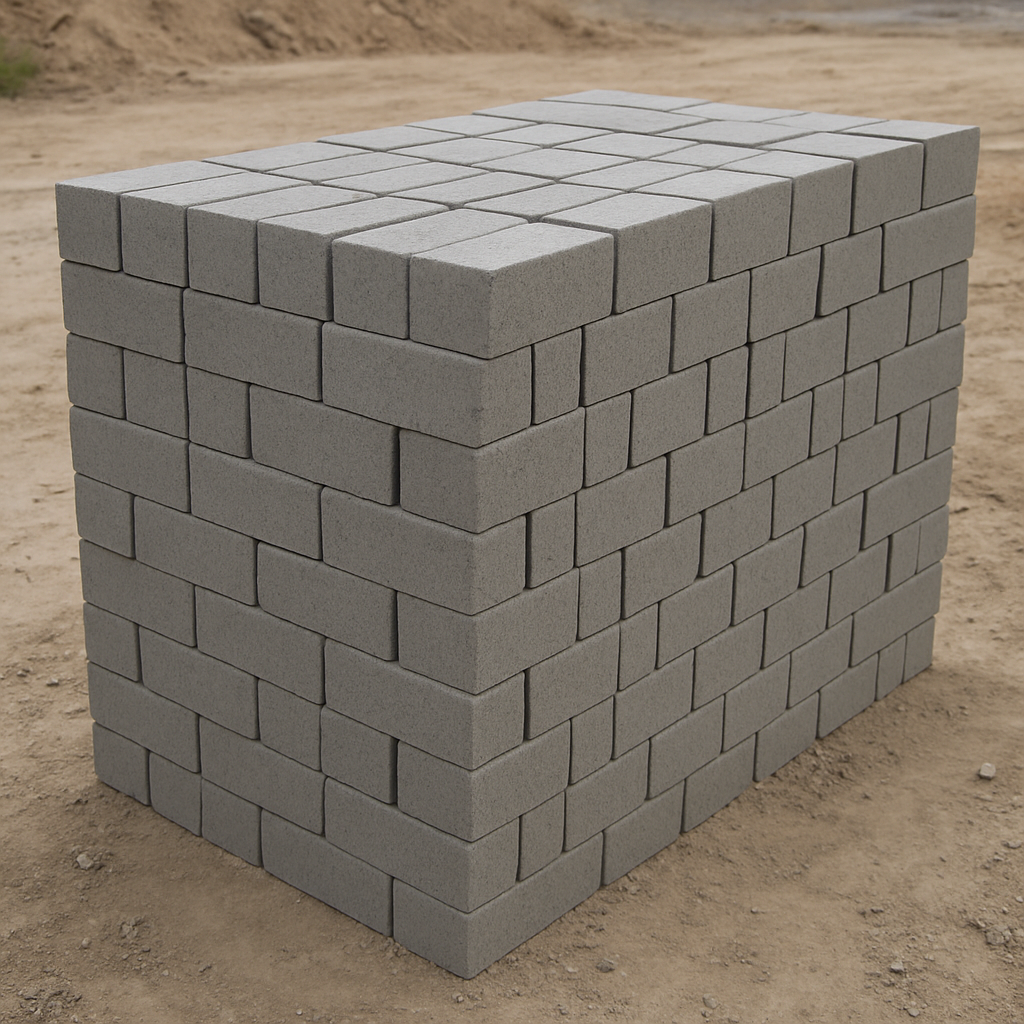
Stepping away from fiery kilns introduces a completely different approach to building. The modern concrete alternative swaps baked earth for sand, crushed stone, and Portland cement. This cement acts as a binding glue that hardens through a water-based chemical reaction rather than intense heat. By solidifying at room temperature—a process called cold curing—these blocks skip the oven entirely.
Choosing between these materials comes down to long-term performance. When weighing their respective properties, three distinct differences stand out:
Lifespan: Both endure for decades, but traditional heat-fired clay has a proven track record of surviving for centuries.
Color Fading: Clay’s natural, baked-in hue never fades. Concrete relies on artificial pigments that can gradually dull over time.
Temperature Control: Traditional clay offers excellent thermal mass benefits. Acting like a heat sponge, dense clay absorbs solar warmth by day and slowly releases it at night, naturally keeping homes cooler in summer and warmer in winter.
Both materials remain reliable staples of construction, yet the evolution of the building block continues with sustainable industrial innovations.
New Age Masonry: How Fly Ash and Calcium Silicate Bricks Are Made
Modern building doesn’t always require baking clay in a roaring fire. Seeking eco-friendly alternatives, manufacturers now repurpose industrial leftovers. The fly ash production process rescues fine ash from coal power plants, mixing this powdery waste with water and cement to create a rock-solid structural block.
Another leap in masonry comes from combining sand and lime, the core ingredients of calcium silicate bricks. Instead of facing a fiery kiln, these are cured in an autoclave—essentially a giant industrial pressure cooker. The high-pressure steam triggers a chemical reaction that safely fuses the materials together, creating perfectly uniform blocks with crisp, razor-sharp edges.
Skipping the intense heat of traditional kilns means these modern options require far less energy to make, saving both money and resources. However, while these alternatives perform beautifully in standard residential walls, certain extreme projects demand heavy-duty specialization.
Bricks for Extreme Jobs: Engineering and Refractory Variations
While standard clay blocks suit garden walls, underground foundations require a tougher variety. Baking clay at extreme temperatures creates an “engineering brick”—an incredibly dense block with low porosity, meaning it lacks the microscopic holes where water typically sneaks in.
To meet strict structural strength requirements, these materials act as a heavy-duty shield against damp earth. Builders categorize them by their water absorption limits:
Class A: Absorbs less than 4.5% water (nearly waterproof).
Class B: Absorbs up to 7% water (ideal for general groundwork).
Extreme heat demands another specialty entirely. Lining a backyard pizza oven requires refractory bricks, whose heat-deflecting secret lies in their unique chemical composition. Packed with extra alumina—a mineral that acts like a thermal forcefield—they survive roaring fires without melting into a puddle of glass.
Your Masonry Checklist: Identifying Quality and Sustainability
You can confidently evaluate materials for your own projects by spotting a well-fired block based on uniform color and crisp, sharp edges. If you notice a chalky white powder on an existing wall, don’t panic. That is simply efflorescence—a natural mineral salt left by evaporated moisture, not a structural failure.
As you plan your next home project, explore the incredible variety of masonry available today. Consider researching sustainable alternatives, like reclaimed or low-carbon options, to lower your environmental footprint. Choosing the right structural recipe is an empowering first step toward building a resilient home designed to stand strong for a century.
Newsletter Updates
Enter your email address below and subscribe to our newsletter