Before You Go — Get BRAND BOA Updates Top Products, Shed Plans & Estimating Tips
Join homeowners, DIY builders & contractors
Subscribe to receive construction product recommendations, shed plan updates, BOQ tips, and useful buying guides for tools, materials, finishes, and building essentials. We’ll help you discover selected products from trusted USA suppliers and share practical ideas to plan, price, and build smarter.
Innovative Construction Technology Examples & Trends
You’ve likely seen the towering cranes and endless orange cones disrupting your commute, but have you noticed the drones hovering overhead? For centuries, this sector has been defined by back-breaking sweat, dusty blueprints, and notoriously slow timelines. Today, however, the rise of digital construction is giving those heavy physical sites a much-needed “digital brain.”
How exactly does a traditional site trade manual labor for modern building technology? Imagine creating a house by using a giant, computer-guided hot glue gun that layers concrete perfectly in a matter of days. According to recent industry reports, this shift toward automated processes like 3D printing drastically cuts down on costly delays and material waste.
Protecting the people on site represents another massive driver behind this industry evolution. Wearable sensors and flying cameras are ushering in an era of tech-assisted safety, spotting structural hazards long before a human ever steps onto a dangerous ledge.
Exploring the future of our physical world requires looking at both the machines we can see and the code we cannot. The most exciting construction technology examples move seamlessly from visible hardware, through new building processes, straight into the invisible software orchestrating it all.
Why Drones Are More Than Just Toys for Construction Sites
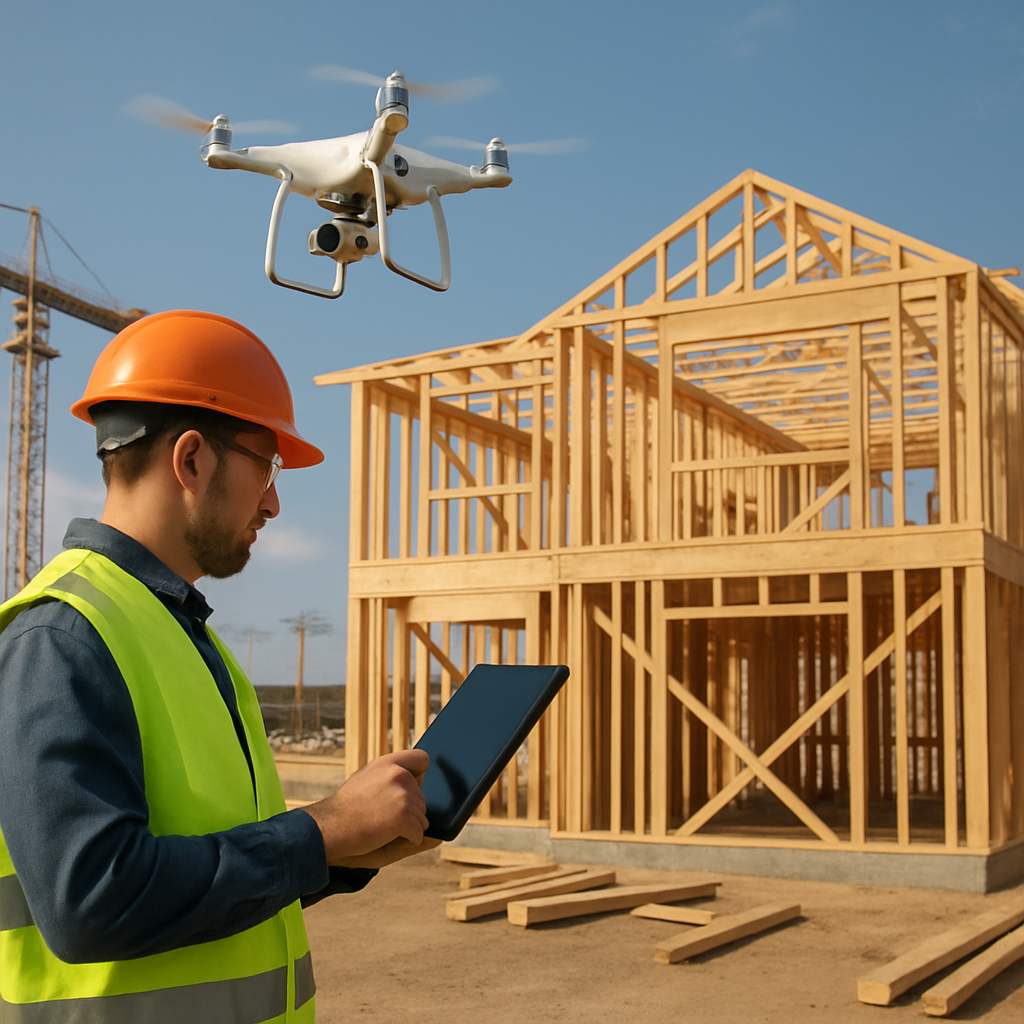
You’ve probably seen small quadcopters buzzing around local parks, but today they are essential construction tools. Instead of just snapping photos, commercial drones act as the ultimate “eyes in the sky.” By catching mistakes before they require expensive physical fixes, these flying cameras save builders thousands of dollars through early detection.
The real magic happens when software turns flight data into a digital model—a process known as photogrammetry, which is simply highly accurate 3D mapping. With this technology, one drone can easily perform three vital tasks:
Aerial mapping: Scanning vast plots of land in minutes rather than days to speed up project timelines.
Safety hazard identification: Spotting unsecure scaffolding to show exactly how drones improve construction site safety.
Progress photography: Handling daily site surveillance without sending a person up a dangerous crane.
Keeping human feet on the ground during high-elevation inspections drastically reduces the risk of serious falls. While drones handle the dangerous work up high, innovators are also protecting the crews lifting heavy materials down below through mechanical assistance.
Wearing Your Strength: How Exoskeletons Turn Workers into Super-Builders
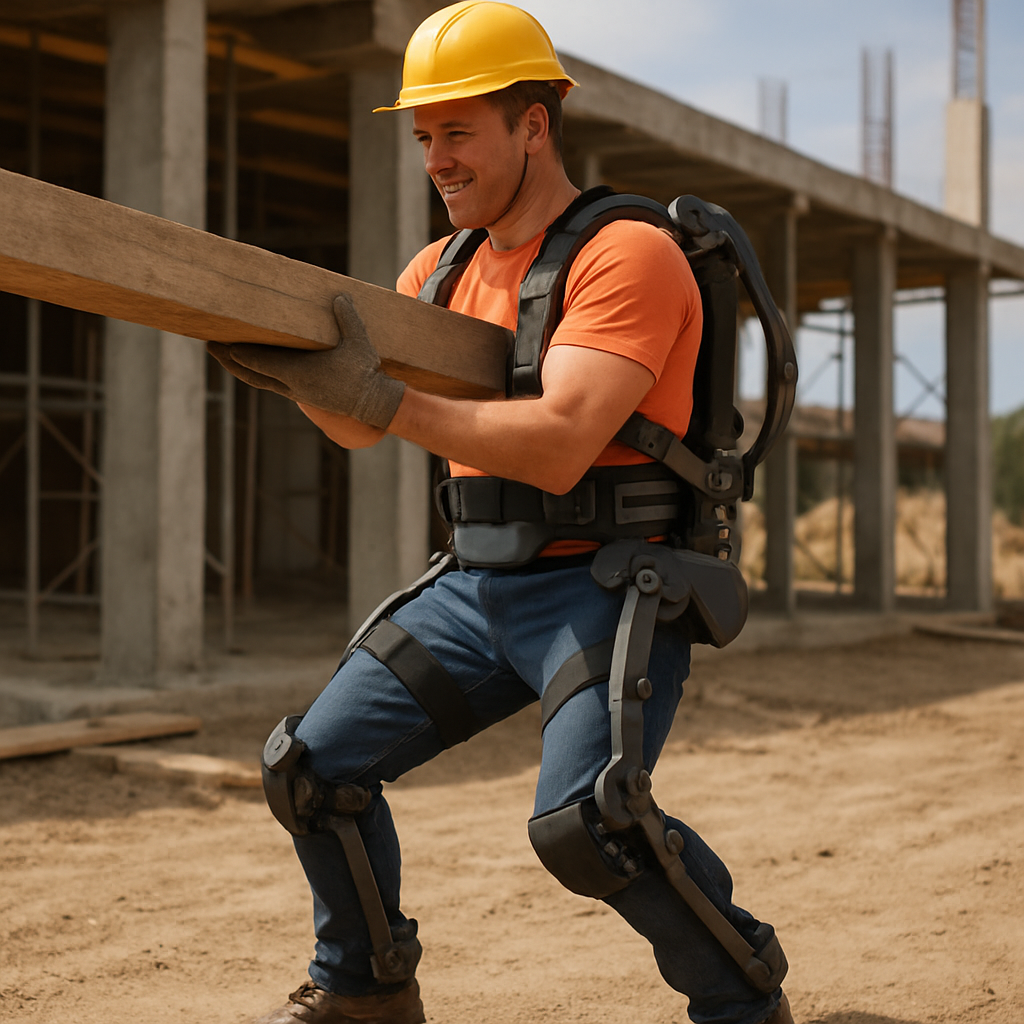
Lifting heavy materials all day takes a massive toll on the human body. To solve this, builders are using a solution straight out of a comic book: exoskeletons for reducing physical strain on workers. These mechanical frames act like an Iron Man suit, shifting weight away from joints so tradespeople can work safely.
While some suits are “powered” by batteries to lift extreme weights, many are “unpowered” systems using simple springs to support natural movement. This construction tech often pairs with wearable technology for monitoring worker health, tracking fatigue in real time to drastically drop injury claims.
By protecting joints from daily wear, these devices allow skilled tradespeople to comfortably extend their careers. With humans better protected, innovators are now looking to make building materials less wasteful by exploring advanced additive manufacturing.
Can You Print a Home? Reducing Material Waste Through 3D Concrete Printing
If you have seen a desktop 3D printer build a plastic toy, you already understand modern house printing. Giant robotic arms act like enormous hot glue guns, squeezing out continuous layers of special wet concrete. This process—known as additive manufacturing—builds structural walls from the ground up without a single nail.
Compared to traditional framing, 3D concrete printing completely redefines modern building technology. This method creates homes using three distinct advantages over standard construction:
Record Speed: Shells that typically take weeks of manual labor are printed in just 24 hours.
Zero Waste: By only extruding exactly what the blueprint requires, this technique excels at reducing material waste compared to dumpsters full of scrap wood.
Design Freedom: Smooth, curved walls cost the exact same to print as straight lines, making storm-resistant shapes much cheaper.
Sustainability is just one piece of the future housing puzzle. While printing concrete outdoors transforms the traditional job site, other innovators are choosing to build entire finished rooms inside high-tech factories instead. This shift away from weather-dependent work highlights the benefits of modular and offsite construction, which offers a faster and greener alternative.
The LEGO Effect: Why Modular and Offsite Construction Is Faster and Greener
Rain and snow have always been the natural enemies of a building timeline. To beat the weather, developers are moving the process indoors through offsite manufacturing. Think of this approach like building with giant LEGO bricks. Rather than cutting wood in the mud, workers construct fully finished rooms inside climate-controlled factories. This highlights the stark efficiency of prefabrication versus traditional onsite construction, where unpredictable elements consistently cause frustrating, expensive delays.
Once complete, these finished rooms—or modules—are trucked to the destination and seamlessly stacked into place. The core benefits of modular and offsite construction become obvious when a multi-story apartment is assembled in just weeks instead of months. Because work happens on a well-lit, precision assembly line, builders experience far fewer defects and can easily recycle leftover materials directly on the factory floor to dramatically reduce environmental waste.
Stacking pre-wired rooms perfectly is a physical marvel of smart construction, but it only succeeds if every measurement is flawless. To ensure these massive blocks fit securely on the very first try, engineers must first build the entire project in a completely virtual world.
Building Twice: How Digital Twins and BIM Predict the Future of a Skyscraper
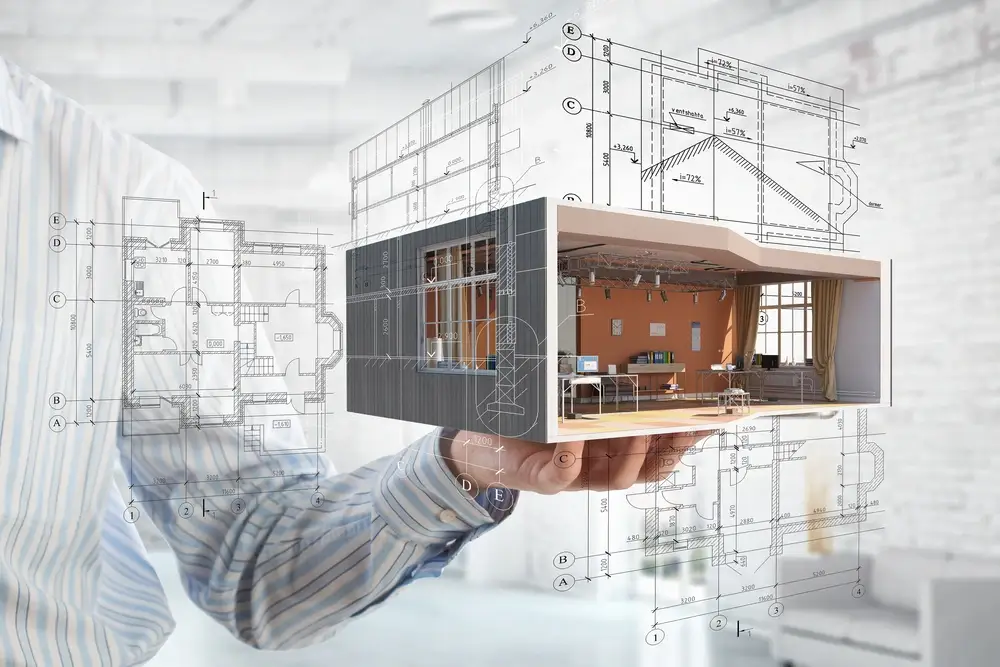
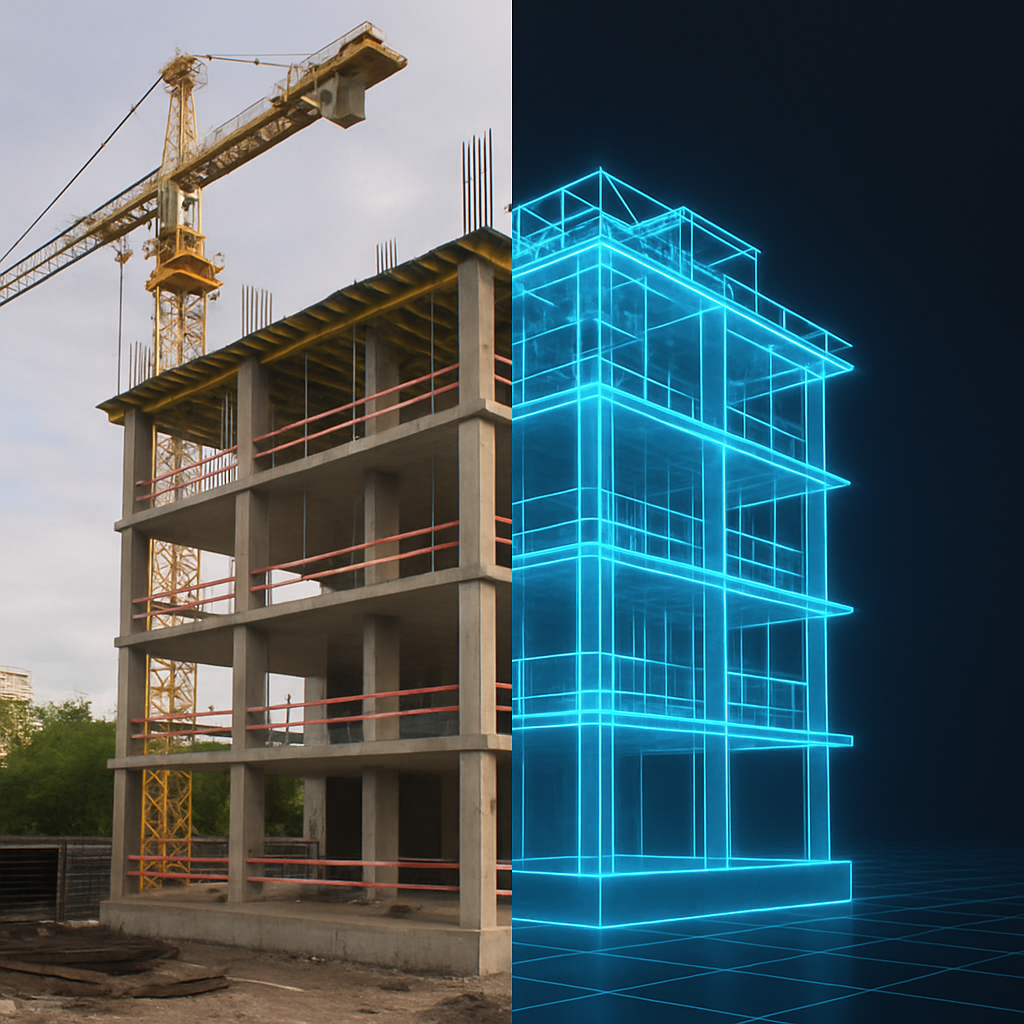
Flat paper blueprints outline a project, much like a simple recipe. But modern construction software creates a highly detailed, 3D simulation of a project before a single shovel hits the dirt. This is Building Information Modeling (BIM)—a smart, 1-to-1 digital replica of physical reality packed with exact measurements and material details.
Constructing this virtual version first creates a massive building information modeling impact on project efficiency. By building in a digital space, computers can automatically run “clash detection.” If a digital air duct runs right through a steel support beam, engineers can fix the mistake on a screen for free, preventing expensive tear-downs on the physical site.
Once the physical structure is finished, that 3D blueprint evolves into a Digital Twin. A Digital Twin is like a “The Sims” version of the real building that updates in real-time, helping owners use digital twin technology for lifecycle management to track energy use and schedule maintenance decades into the future.
While these virtual models manage the long-term health of a skyscraper, an active work zone requires immediate, on-the-ground awareness. To feed data back to that digital brain and protect the ongoing physical work, builders are deploying smart sensors and AI through the Internet of Things (IoT) to keep sites secure.
Smart Sensors and AI: The Internet of Things (IoT) Keeping Sites Secure
Have you ever wondered how builders know exactly when a foundation is strong enough to hold up a skyscraper? Today, ordinary materials are getting a digital voice through the Internet of Things (IoT)—a network of connected physical objects. By relying on real-time data collection using IoT sensors, managers stream continuous updates directly to their phones instead of simply guessing.
This constant flow of information powers smart construction by turning chaotic work zones into organized systems. Modern sites rely on three main devices:
Concrete maturity sensors: Embedded in foundations to text workers the exact moment it cures.
GPS equipment trackers: Attached to expensive machinery to prevent theft.
Environmental monitors: Tracking wind and dust to protect worker health.
Beyond tracking supplies, this technology acts as a digital guard dog. By enhancing site security with AI surveillance, smart cameras instantly spot trespassers or alert managers if a worker forgets their hard hat. While these digital brains protect the site, engineers are also rethinking the physical building blocks, looking toward living concrete and smart glass to fix our carbon footprint.
Living Concrete and Smart Glass: The Materials Fixing Our Carbon Footprint
You already know that producing traditional concrete releases massive carbon emissions into our atmosphere. To fix this, scientists created self-healing concrete—a material acting much like human skin to repair its own cuts. By mixing dormant bacteria into the cement, the concrete literally “bleeds” limestone when water seeps into a crack, sealing the gap naturally. This living foundation prevents costly structural damage before it starts, offering enormous long-term maintenance savings for bridges and homes.
Moving up the walls, skyscrapers are now utilizing photochromic glass. Think of this as transition lenses for an entire building. These windows automatically tint to block harsh sunlight, then clear up when clouds appear. Embracing these smart building materials for energy efficiency drastically reduces the need for constant air conditioning. It remains one of today’s most vital construction trends because it directly shrinks a city’s daily carbon footprint.
Together, these innovations prove that modern green building technology does more than just exist; it actively reacts, heals, and protects our planet, setting the stage for a sustainable, high-tech skyline.
The Future of Building: Your Roadmap to Navigating the High-Tech Skyline
When you walk past a job site now, you no longer just see hard labor and steel. You recognize the digital brain guiding the physical muscle. This shift from sweat to data proves humans aren’t being replaced—they are simply being equipped with safer, smarter tools. By blending robotic hardware with artificial intelligence, the industry is elevating human potential.
This technological shift offers new ways to engage with your community’s development and support modernization:
Stay informed on local builds happening in your neighborhood.
Support sustainable zoning initiatives at local town meetings.
Explore tech careers shaping this newly modernized industry.
The next time you see an empty lot, your perspective will be entirely different. Instead of anticipating months of loud delays, you can visualize the future of construction: affordable, 3D-printed homes rising quietly overnight to become smart buildings that protect both people and the planet.
Newsletter Updates
Enter your email address below and subscribe to our newsletter