Before You Go — Get BRAND BOA Updates Top Products, Shed Plans & Estimating Tips
Join homeowners, DIY builders & contractors
Subscribe to receive construction product recommendations, shed plan updates, BOQ tips, and useful buying guides for tools, materials, finishes, and building essentials. We’ll help you discover selected products from trusted USA suppliers and share practical ideas to plan, price, and build smarter.
Every successful building project, whether it is a towering skyscraper, a sprawling residential complex, or a vital highway, is built on a foundation of trust. However, in the construction industry, trust cannot rely on blind faith. It must be backed by hard data, rigorous science, and uncompromising standards. This is where construction materials testing steps into the spotlight.
From the soil beneath the foundation to the asphalt on the pavement, verifying the physical properties of the materials used is not just a regulatory hurdle; it is the core of modern engineering. In this comprehensive guide, we will explore the intricate world of material testing inspection, breaking down the methods, standards, and practices that keep our structures standing tall.
The Foundation of Safety: Why is Material Quality Control Essential?
If you have ever looked at a massive infrastructure project and wondered, why is material quality control essential? the answer lies in public safety and long-term financial viability. Minor inconsistencies in concrete mixtures, slightly under-compacted soil, or substandard steel can lead to catastrophic consequences over time.
The primary goal here is preventing structural failure through analysis. By rigorously testing materials before, during, and after they are implemented, engineers can predict how these materials will behave under stress, weather fluctuations, and the simple passage of time. A proactive approach to construction materials testing saves millions in rework, minimizes legal liabilities, and most importantly, protects human lives.
Core Components of Material Testing Inspection
The umbrella of construction materials testing and inspection covers several distinct disciplines. Let’s break down the major categories that ensure a project’s integrity from the ground up.
Soils and Earthwork: Starting on Solid Ground
Before a single drop of concrete is poured, the earth below must be evaluated. The geotechnical site investigation importance cannot be overstated. Geotechnical engineers analyze the soil’s load-bearing capacity, moisture content, and chemical composition to dictate the foundation’s design.
Once earthmoving begins, technicians rely on specific soil compaction field methods to ensure the ground will not settle unevenly under the weight of a building. Techniques like the Sand Cone Method or the use of Nuclear Density Gauges provide real-time data on soil density and moisture. Because timing is critical during the excavation phase, site managers frequently search for “compaction testing near me” to partner with local laboratories that can dispatch technicians rapidly, keeping the project safely on schedule without weather delays.
Concrete: The Backbone of Modern Construction
Concrete is the most widely used man-made material on earth, making its evaluation paramount. Partnering with reputable concrete testing companies guarantees that the mix arriving in the trucks matches the structural engineer’s design. Because concrete has a strict time limit before it cures, contractors often look for “concrete testing near me” to ensure rapid, on-site verification of their daily pours.
Top-tier concrete testing services typically focus on two vital aspects: workability and strength.
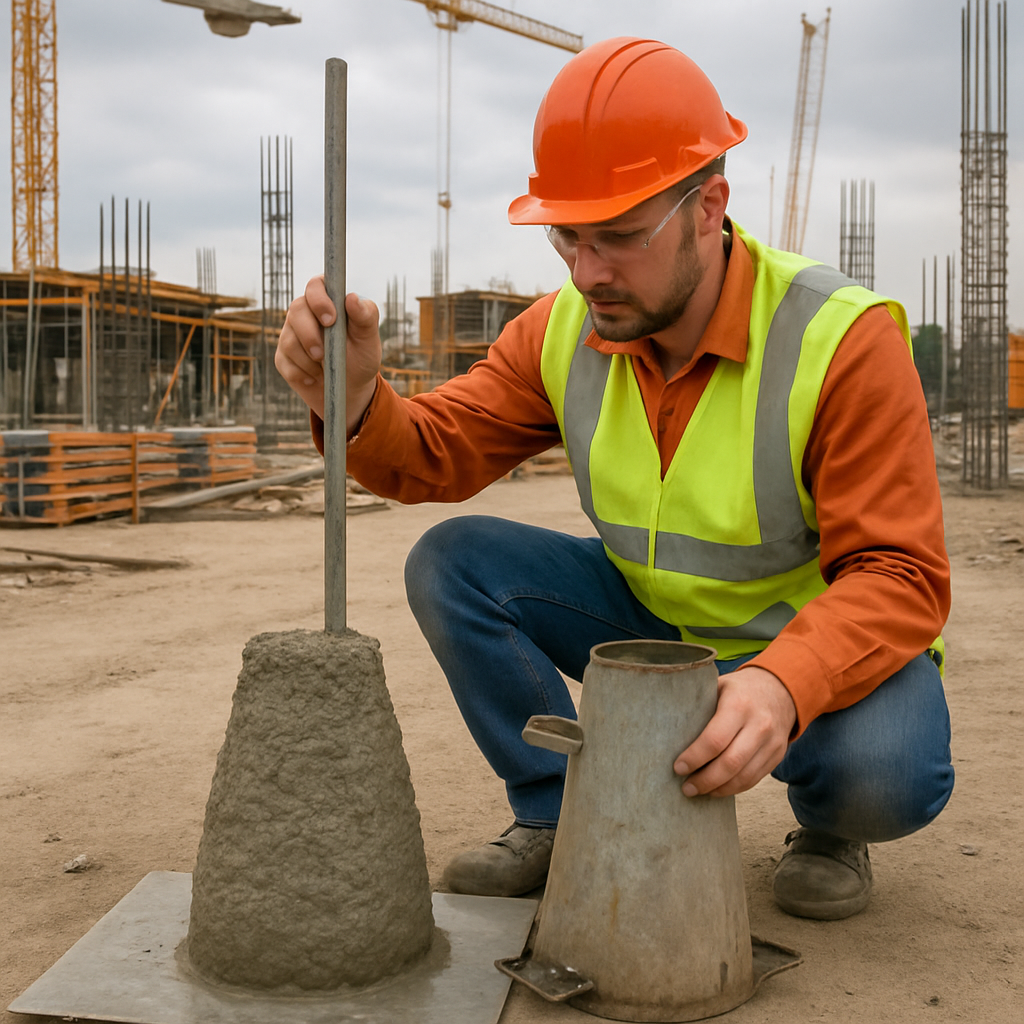
1. Workability: How to Conduct a Concrete Slump Test Workability is a measure of how easily fresh concrete can be placed and consolidated. If you want to know how to conduct a concrete slump test—the universal field standard for this—the process is highly specific:
Place a standardized metal cone (the slump cone) on a flat, non-absorbent surface.
Fill the cone in three equal layers with fresh concrete.
Tamp (rod) each layer 25 times with a standard steel rod to remove air pockets.
Strike off the excess concrete at the top, making it level.
Carefully lift the cone straight up.
Measure the distance the concrete “slumps” or falls from its original height. This measurement dictates if the batch has the correct water-to-cement ratio.
2. Strength: Concrete Compressive Strength Procedures While the slump test happens on the spot, confirming the final strength takes patience. Standard concrete compressive strength procedures involve casting fresh concrete into cylindrical molds on-site. These cylinders are then cured in a strictly temperature-controlled water bath or curing room. At specific intervals—usually 7, 14, and 28 days—the cylinders are placed in a hydraulic press and crushed. The force required to break them proves whether the concrete meets the structural demands of the blueprint.
Field vs. Lab: Understanding the Environment
In the world of testing, there are inherent field versus laboratory analysis trade-offs.
Field testing offers the distinct advantage of real-time results. Engineers can make immediate decisions, such as rejecting a concrete truck or requiring extra passes with a soil compactor. However, field tests are subject to environmental variables like extreme heat, wind, and rain, which can occasionally skew results.
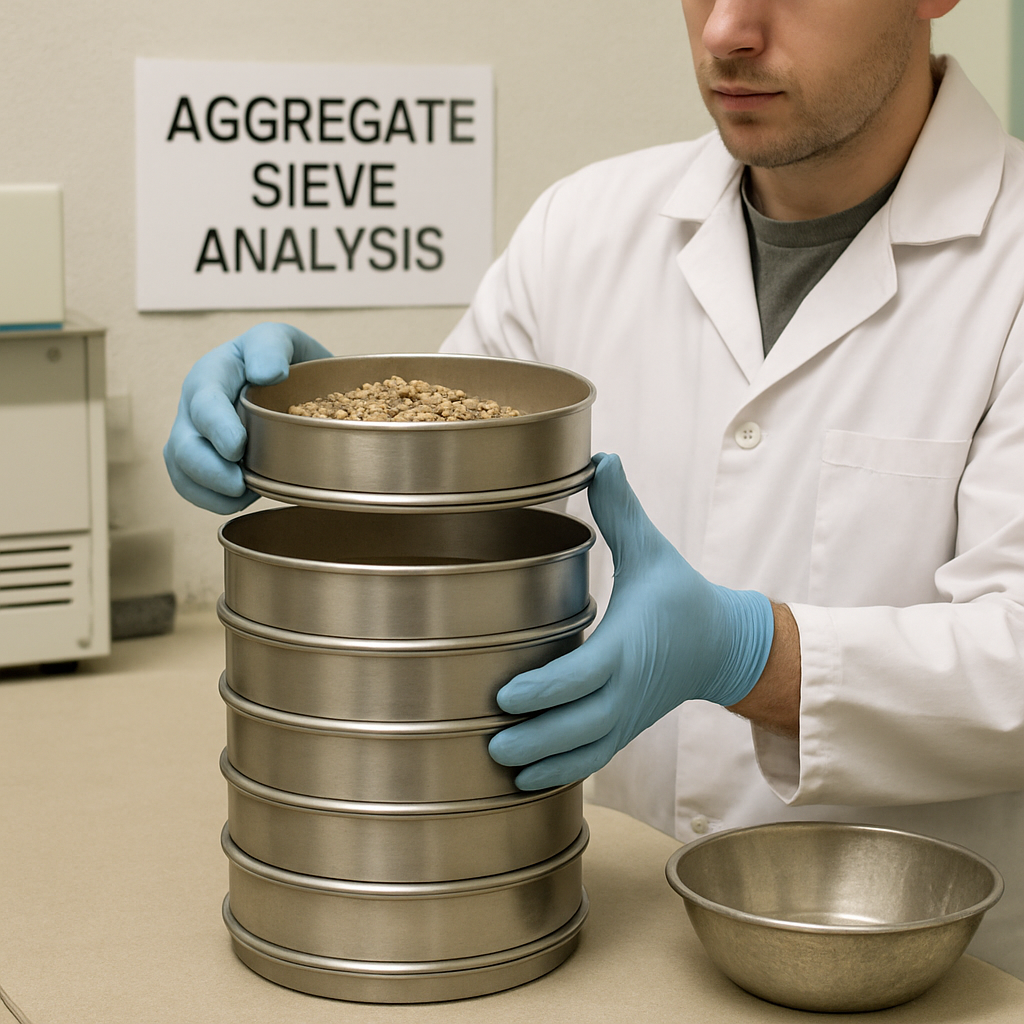
Laboratory testing, conversely, offers absolute environmental control. A perfect example of a lab-exclusive procedure is the aggregate sieve analysis process. In this test, a technician takes a sample of sand or gravel, dries it completely, and vibrates it through a stack of wire-mesh sieves, each with progressively smaller openings. Weighing the material retained on each sieve allows the lab to plot a gradation curve, ensuring the aggregate particles will lock together tightly when mixed with asphalt or cement. While lab tests are highly accurate, they require time—something a fast-paced job site may lack.
The Inspection Approach: Destructive vs. Non-Destructive
Understanding the difference between destructive versus non-destructive inspection is also crucial.
Destructive testing involves permanently altering or breaking the material, such as crushing concrete cylinders or pulling steel rebar until it snaps in a tensile tester. It provides undeniable proof of the material’s maximum capacity.
However, when evaluating structures that are already built, you cannot simply tear down a wall to test it. Here, non-destructive evaluation of masonry and concrete comes into play. Using ground-penetrating radar (GPR), ultrasonic pulse velocity tests, or rebound hammers, inspectors can locate hidden voids, measure internal strength, and map out rebar without leaving a single scratch on the building.
Infrastructure and Pavements: The Asphalt Angle
When the discussion shifts from vertical buildings to horizontal roadways, the focus moves heavily toward asphalt and pavements. Improving infrastructure durability with sampling is a constant priority for civil engineers and city planners.
For road construction, one of the most critical skills is accurately interpreting asphalt density reports. If asphalt is not compacted to the correct density, it will contain too many air voids. Water can seep into these voids, freeze during winter, and expand, leading to rapid degradation and severe potholes.
To prevent this, contractors must adhere strictly to AASHTO specifications for road projects. The American Association of State Highway and Transportation Officials (AASHTO) sets the rigorous guidelines that dictate everything from the specific grade of liquid asphalt binder to the exact temperature at which the asphalt must be rolled. Following these specifications ensures that highways can withstand the relentless pounding of heavy commercial trucks year after year.
Adhering to the Rules: Standards and Certifications
No matter what material is being tested, the testing process itself must be standardized. Otherwise, a test done in New York might yield entirely different results than one done in California.
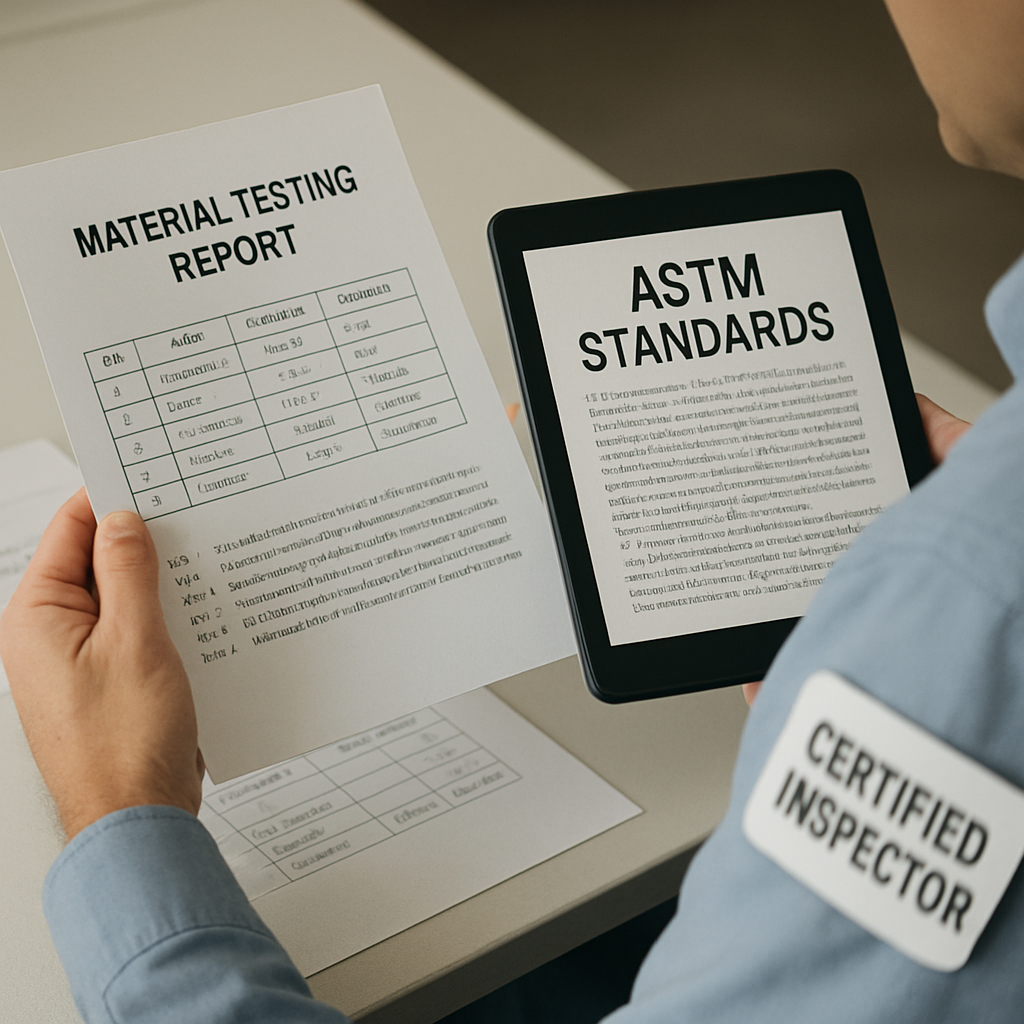
This is why testing agencies strictly follow ASTM standards for building components. The American Society for Testing and Materials (ASTM) provides globally recognized, step-by-step consensus standards for almost every material imaginable. Whether it is the chemical composition of structural steel, the fire resistance of drywall, or the thermal properties of insulation, ASTM dictates exactly how it must be evaluated.
The Value of Independence
When hiring an agency for construction materials testing, neutrality is key. There are massive third-party laboratory certification benefits that project owners must consider.
A certified, independent testing laboratory has no financial stake in the construction project’s timeline or budget. Their only job is to report the objective truth about the materials. This impartial material testing inspection provides immense peace of mind. Furthermore, in the event of a structural failure or a legal dispute, having certified, third-party documentation proving that all materials met the required specifications is the ultimate legal defense for an owner or architect.
Actionable Tips for Your Next Construction Project
If you are a project manager, developer, or contractor preparing to break ground, keeping material quality in check should be your top priority. Here are a few actionable takeaways to ensure success:
Hire Locally for Speed: Time-sensitive materials require rapid responses. Search for local experts—whether it’s for compaction or concrete evaluations—to ensure technicians can reach your site before materials dry, set, or become unworkable.
Insist on Accredited Labs: Always verify that the testing agency you hire holds current accreditations (like AASHTO re:source or ISO 17025) and that their field technicians are certified by organizations like the American Concrete Institute (ACI).
Don’t Skip the Geotech Report: Never rush the initial site investigation. The money saved on skipping deep soil analysis is easily wiped out by the cost of fixing a cracked, settling foundation.
Communicate Clearly: Ensure that the testing agency has the most up-to-date architectural and structural blueprints so they know exactly what specifications and ASTM standards they are testing against.
Use Non-Destructive Tests for Renovations: If you are retrofitting an older building, utilize non-destructive methods to map out the existing structure safely before you begin heavy demolition.
Conclusion
The buildings we live in, the offices we work in, and the roads we drive on are only as reliable as the materials used to create them. Construction materials testing is the invisible shield that protects the public from the devastating effects of structural failure.
By prioritizing thorough geotechnical site investigations, engaging reputable independent testing companies, adhering to strict ASTM and AASHTO standards, and understanding the nuances of field versus lab testing, the construction industry continues to build a safer, more durable world. Investing in material quality control isn’t just about ticking a regulatory box—it is the ultimate commitment to safety, longevity, and engineering excellence.
Newsletter Updates
Enter your email address below and subscribe to our newsletter