Before You Go — Get BRAND BOA Updates Top Products, Shed Plans & Estimating Tips
Join homeowners, DIY builders & contractors
Subscribe to receive construction product recommendations, shed plan updates, BOQ tips, and useful buying guides for tools, materials, finishes, and building essentials. We’ll help you discover selected products from trusted USA suppliers and share practical ideas to plan, price, and build smarter.
If you are planning a hardscaping project, building a retaining wall, or designing a retro-inspired patio, you have likely encountered a confusing mix of masonry terminology. Builders, DIY enthusiasts, and home improvement stores often use terms like “cinder block,” “concrete block,” and “breeze block” interchangeably. However, to a mason or an architect, these materials are distinct, each designed for entirely different structural and aesthetic purposes.
Understanding the nuances of breeze block vs cinder block is essential not just for the look of your project, but for its structural safety, longevity, and budget.
In this comprehensive guide, we will break down the differences in composition, structural capabilities, and modern applications of these popular masonry units, helping you choose the exact right material for your next build.
What Are Cinder Blocks Made Of?
To understand the differences between these building materials, we first need to look at their composition. So, exactly what are cinder blocks made of?
Traditionally, cinder blocks were manufactured using a mixture of Portland cement and “cinders”—combustible coal ash left over from coal-fired power plants or industrial furnaces. These cinders acted as the aggregate in the mixture instead of the heavy crushed stone or gravel used in standard concrete.
This historic formulation gave birth to lightweight clinker blocks for construction, which were highly popular in the early to mid-20th century. Because they were filled with ash, these blocks were noticeably lighter than modern concrete, making them easier for masons to lift and install.
When comparing ash-based masonry vs cement blocks (which use heavier aggregates), ash-based cinder blocks have a lower density. Today, true traditional cinder blocks are rarely mass-produced because the coal ash supply has dwindled, and building codes have evolved. However, modern manufacturers sometimes utilize fly ash as a supplementary material. The resulting fly ash concrete block properties include excellent thermal insulation, a lighter overall weight, and a reduced carbon footprint compared to pure Portland cement mixtures.
Navigating the Terminology: Concrete, Cement, and Cinder
The masonry aisle at your local hardware store can be a linguistic minefield. Let’s clear up the confusion surrounding the most common comparisons.
Cinder Block vs Concrete Block
The primary debate of cinder block vs concrete block comes down to the aggregate used. While cinder blocks use lightweight ash, modern concrete blocks (formally known as Concrete Masonry Units, or CMUs) use sand and fine gravel.
If you are looking at a cinder vs concrete block, the modern concrete block will be significantly stronger, heavier, and denser. Concrete blocks are the industry standard for modern structural foundations and load-bearing walls.
Concrete Block vs Cement Block
You will often hear people ask about the difference in a concrete block vs cement block. In reality, “cement block” is a misnomer. Cement is not a building material on its own; it is the binding powder (the “glue”) used to hold aggregates together to make concrete. Therefore, every cement block is actually a concrete block.
Cinder Block vs Cement Block
Similarly, when discussing a cinder block vs cement block, you are comparing a block made with an ash aggregate against a block made with a sand/gravel aggregate. Both use cement as their binder, but their differing aggregates dictate their weight and strength.
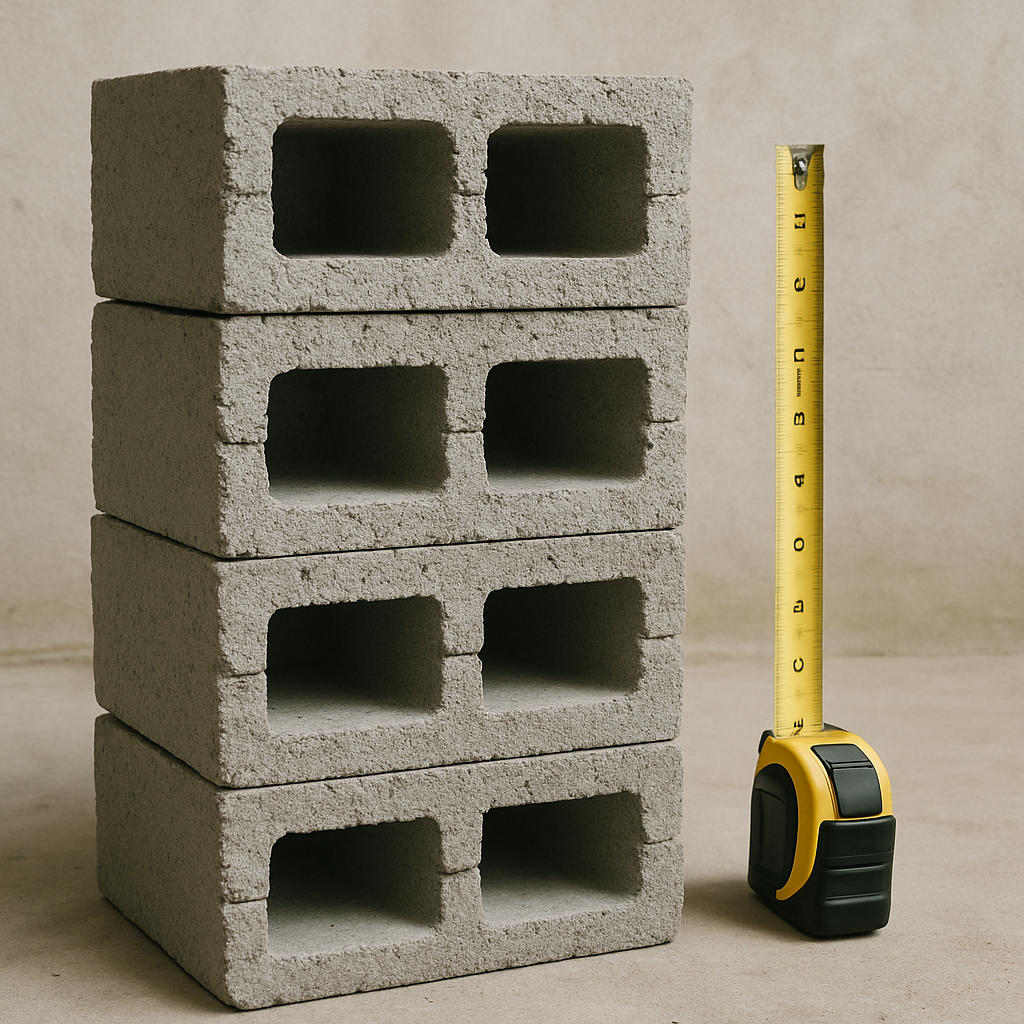
To put this into perspective, let’s look at a concrete masonry unit density comparison. Standard concrete blocks are incredibly dense and heavy. When looking at standard CMU dimensions and weights, a typical 8-inch by 8-inch by 16-inch concrete block weighs between 35 and 40 pounds. A cinder block of the exact same dimensions might weigh only 25 to 30 pounds due to the lighter aggregate.
Breeze Block vs Cinder Block: The Core Differences
Now that we understand cinder and concrete, where do breeze blocks fit into the equation?
The term “breeze block” originally comes from “coke breeze,” another type of ash used in early block making. In some parts of the world (like the UK and Australia), “breeze block” is still just a colloquial term for a standard cinder or concrete block.
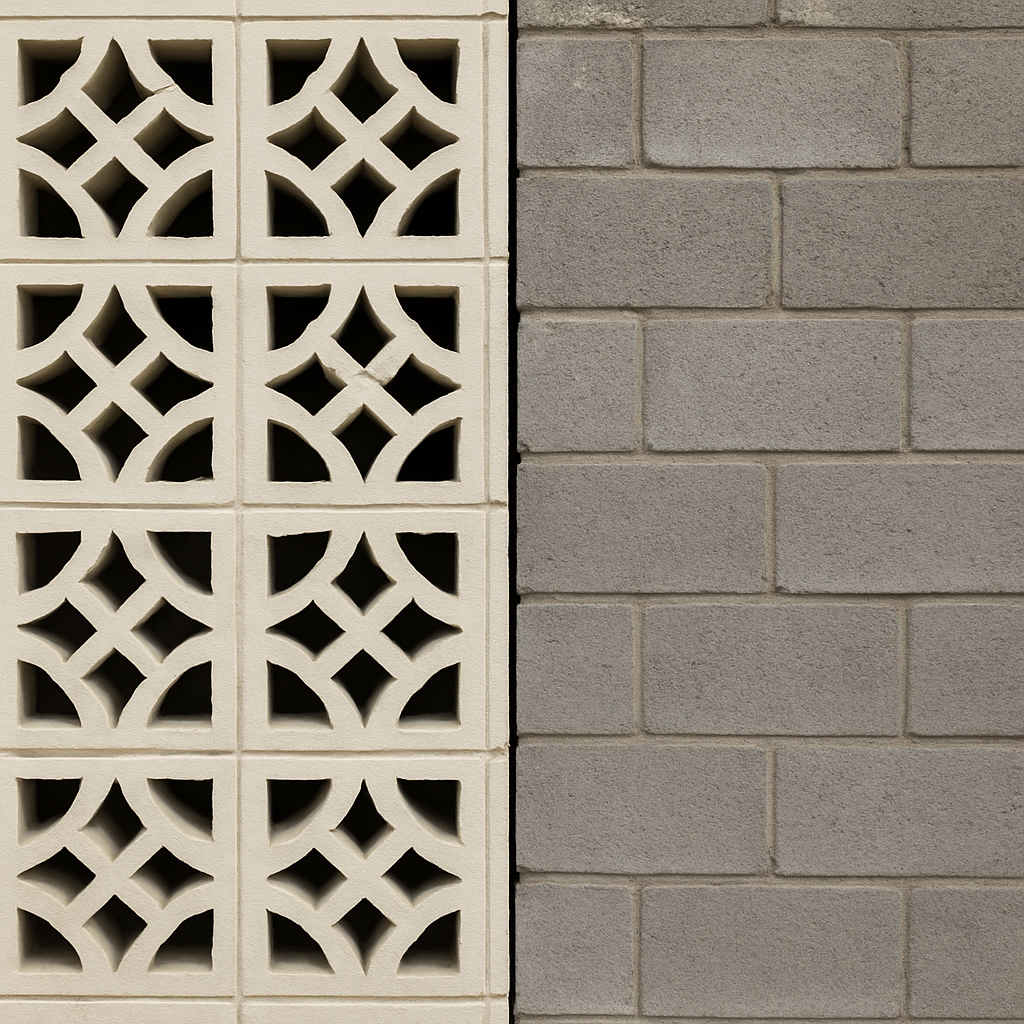
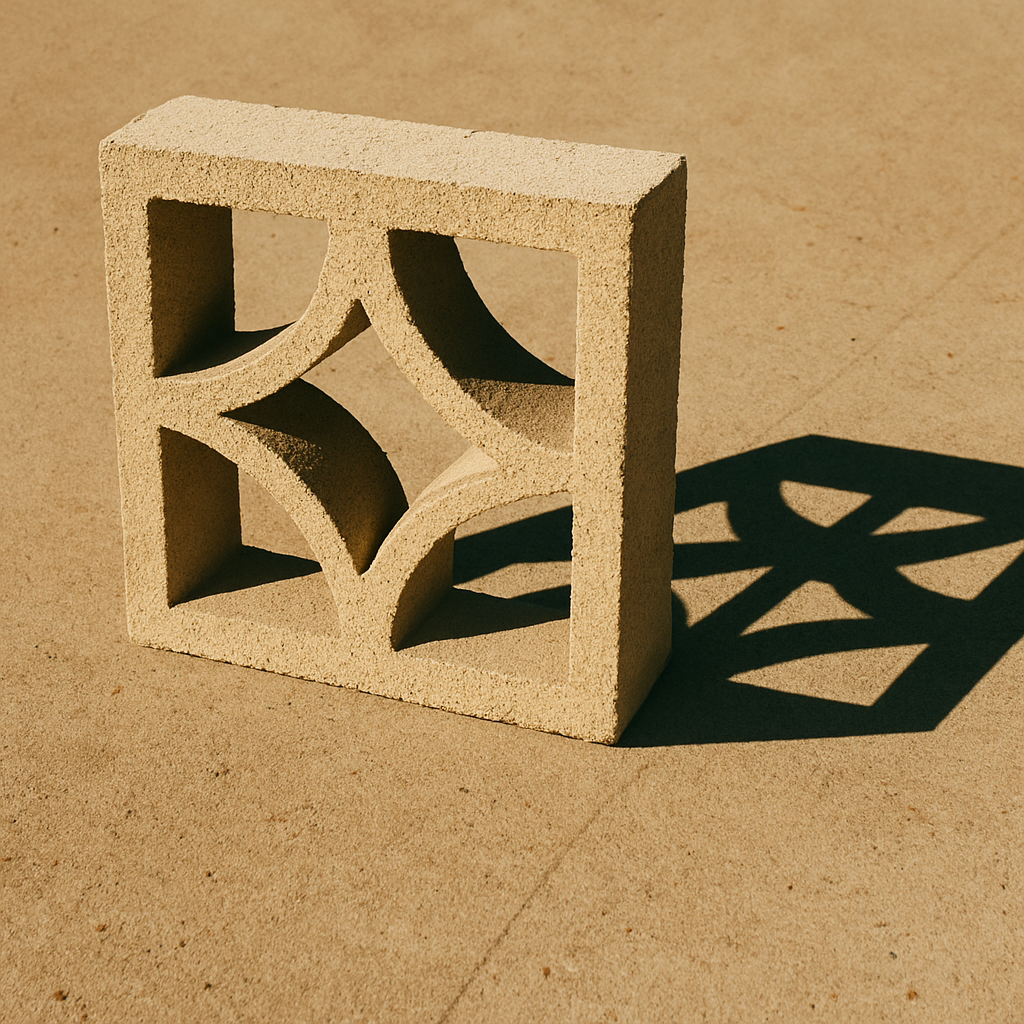
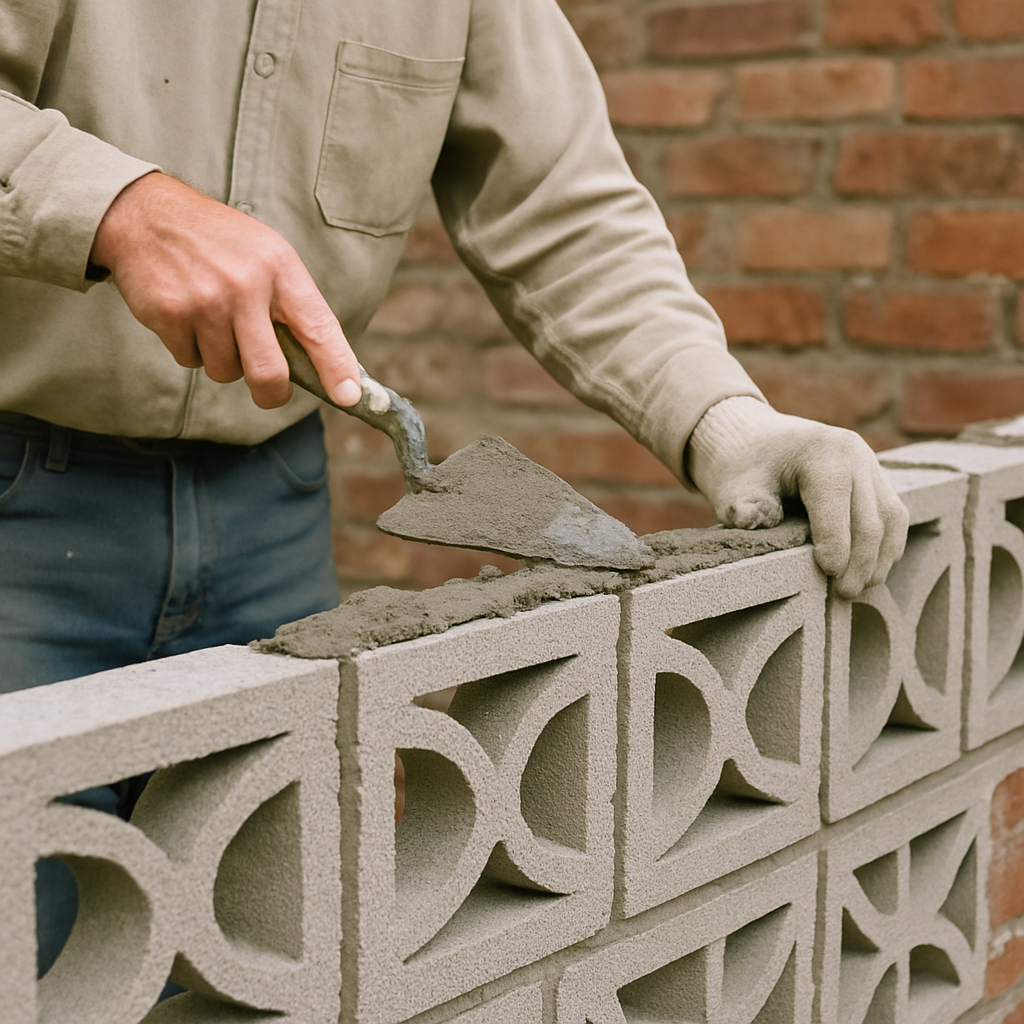
However, in the United States and in modern architectural design, a “breeze block” refers specifically to architectural screen blocks—those highly decorative, perforated concrete blocks that allow a “breeze” and sunlight to pass through.
When looking at a modern breeze block vs cinder block, the differences are stark:
Design: Cinder blocks are solid or have simple structural hollows (webs). Breeze blocks are heavily stylized, featuring geometric cutouts, stars, circles, or floral patterns.
Function: Cinder blocks are built for utility and structural support. Breeze blocks are built for aesthetics, privacy, and airflow.
Placement: Cinder blocks are used in foundations and structural walls. Breeze blocks are used in garden walls, patio dividers, and decorative facades.
Structural Integrity: Are Breeze Blocks Load Bearing?
A critical question for any DIY builder is: are breeze blocks load bearing?
The short answer is no.
Breeze blocks are designed for decorative and non-structural use. Because their beautiful geometric designs require large portions of the concrete to be removed, they lack the compressive strength needed to support a roof, a second story, or heavy structural loads.
Conversely, when assessing the structural integrity of hollow concrete units (standard CMUs), you will find they are explicitly engineered to bear massive loads. Their internal hollow cells can be reinforced with steel rebar and filled with liquid concrete (grout) to create virtually impenetrable, load-bearing walls.
If you want to build a house extension or a retaining wall holding back earth, you must use concrete or cinder blocks. If you want a beautiful partition that separates a dining area from a pool, you use breeze blocks.
Practical Applications and Design Trends
Both materials have unique applications that can drastically improve your property if used correctly.
Cinder Block Uses
Because they are tough and utilitarian, standard cinder block uses include:
Building shed and garage foundations
Constructing raised garden beds
Creating inexpensive fire pits (ensure they are lined with firebrick, as standard cinder can crack under extreme heat)
Building basic retaining walls for landscaping
Breeze Block Uses
Breeze blocks are currently experiencing a massive architectural revival. They are the cornerstone of mid-century modern outdoor wall design, offering a nostalgic, Palm Springs-inspired aesthetic to contemporary homes.
Homeowners are increasingly utilizing beautiful decorative screen block patterns (like the classic clover, sunburst, or snowflake designs) to elevate their outdoor living spaces. Furthermore, retrofitting breeze blocks for privacy screens on existing patios or balconies has become a popular weekend project, providing shade and privacy without completely blocking natural airflow.
Comparing Costs, Weather Resistance, and Insulation
When deciding which material to use for a non-load-bearing project, you should factor in physics and budget.
Cost: There is a noticeable cost difference between heavy and light blocks. Standard concrete and cinder blocks are mass-produced commodities, often costing just $1.50 to $3.00 per block. Because breeze blocks are specialty architectural items, they can range from $5.00 to over $15.00 per block, depending on the complexity of the design and the manufacturer.
Weathering: Both materials are highly porous. You must account for the weather resistance of porous building materials when planning your build. If left untreated in freezing climates, water can seep into the pores of both cinder and breeze blocks, freeze, and cause the concrete to crack (spalling).
Insulation: Interestingly, there are unique insulating properties of aggregate blocks. The porous nature of cinder and fly ash traps tiny pockets of air, giving them a slightly higher thermal resistance (R-value) than dense, solid concrete. While breeze blocks offer no insulation (since they have literal holes in them), traditional cinder blocks were historically favored for their minor insulative benefits in residential construction.
Actionable Tips for Installation and Maintenance
Working with masonry requires specific techniques. Whether you are building a heavy foundation or an airy partition, keep these expert tips in mind.
How to Install Ornamental Garden Walls
Learning how to install ornamental garden walls using breeze blocks requires patience and precision. Because they are not load-bearing, they require external stabilization.
Pour a solid footing: Always start with a level, poured concrete trench footing.
Use pilasters: For every 8 to 10 feet of breeze block wall, you must build a solid masonry column (pilaster) using standard concrete blocks and rebar. This provides lateral stability against wind.
Use ladder wire: Lay steel ladder wire between horizontal courses (layers) of breeze blocks to tie the wall together.
Keep mortar joints uniform: Because breeze blocks are a visual feature, consistent 3/8-inch mortar joints are crucial for an aesthetically pleasing finish.
Painting Exterior Decorative Masonry Walls
Untreated concrete and cinder can look drab and industrial. Painting exterior decorative masonry walls not only enhances their mid-century appeal but also seals the porous surface against moisture.
Clean first: Wire-brush the blocks to remove any loose mortar or efflorescence (white salt deposits).
Prime: Use a high-quality, exterior-grade masonry primer. This fills the deep pores and creates a smooth surface. Use a thick nap roller (3/4-inch to 1-inch) to push the primer into the texture of the block.
Paint: Finish with two coats of elastomeric masonry paint. This type of paint is flexible and stretches slightly, helping to bridge tiny hairline cracks as the concrete expands and contracts with the weather.
The Bottom Line
When choosing between these materials, your decision ultimately comes down to function versus form.
To summarize the breeze block vs cinder block debate: cinder and concrete blocks are the unsung heroes of heavy structural construction, offering incredible strength, durability, and cost-efficiency. On the other hand, breeze blocks are the crown jewels of landscape architecture, offering unparalleled style, passive cooling, and mid-century charm.
By understanding their unique compositions, load-bearing limits, and installation requirements, you can build outdoor structures that are not only structurally sound but visually stunning.
Newsletter Updates
Enter your email address below and subscribe to our newsletter