Before You Go — Get BRAND BOA Updates Top Products, Shed Plans & Estimating Tips
Join homeowners, DIY builders & contractors
Subscribe to receive construction product recommendations, shed plan updates, BOQ tips, and useful buying guides for tools, materials, finishes, and building essentials. We’ll help you discover selected products from trusted USA suppliers and share practical ideas to plan, price, and build smarter.
Protecting your home from the elements starts at the roofline. Every time a storm rolls in, your roof catches hundreds—sometimes thousands—of gallons of rainwater. Without a reliable system to channel that water safely away from your foundation, your home is left vulnerable to flooded basements, eroded landscaping, and compromised structural integrity. Enter the aluminum gutter: the undisputed champion of modern home water management.
Whether you are building a new house or upgrading an aging drainage system, choosing the right material is paramount. Aluminum gutters have become the industry standard, and for good reason. They strike the perfect balance between durability, cost-effectiveness, and curb appeal. Let’s dive deep into why this material reigns supreme, how to customize your system, and the best practices for installation and maintenance.
Why Aluminum Outperforms the Competition
When homeowners begin researching new roof drainage options, they usually find themselves looking closely at a vinyl vs aluminum material comparison. While vinyl systems might boast a lower upfront price tag, they come with significant drawbacks. Vinyl expands and contracts dramatically with temperature fluctuations, leading to cracking, sagging, and eventual failure, especially in extreme climates.
On the other hand, metal guttering—specifically aluminum—offers unparalleled resilience. Unlike steel, aluminum is naturally resistant to corrosion. Because of its unique chemical composition, you rarely have to worry about preventing rust and oxidation. Once exposed to air, aluminum forms a microscopic layer of oxide that seals the metal and protects it from the elements.
Furthermore, aluminum is incredibly lightweight, which puts less stress on your home’s fascia boards while maintaining structural integrity. It is an investment that truly pays off when the harsh weather hits.
The Magic of Seamless Metal Gutters
One of the greatest advancements in modern exterior home improvement is the transition from sectional pieces to seamless metal gutters. Traditionally, gutters were sold in 10-foot sections and pieced together. Every single seam was a potential weak point where leaves could snag and water could eventually leak.
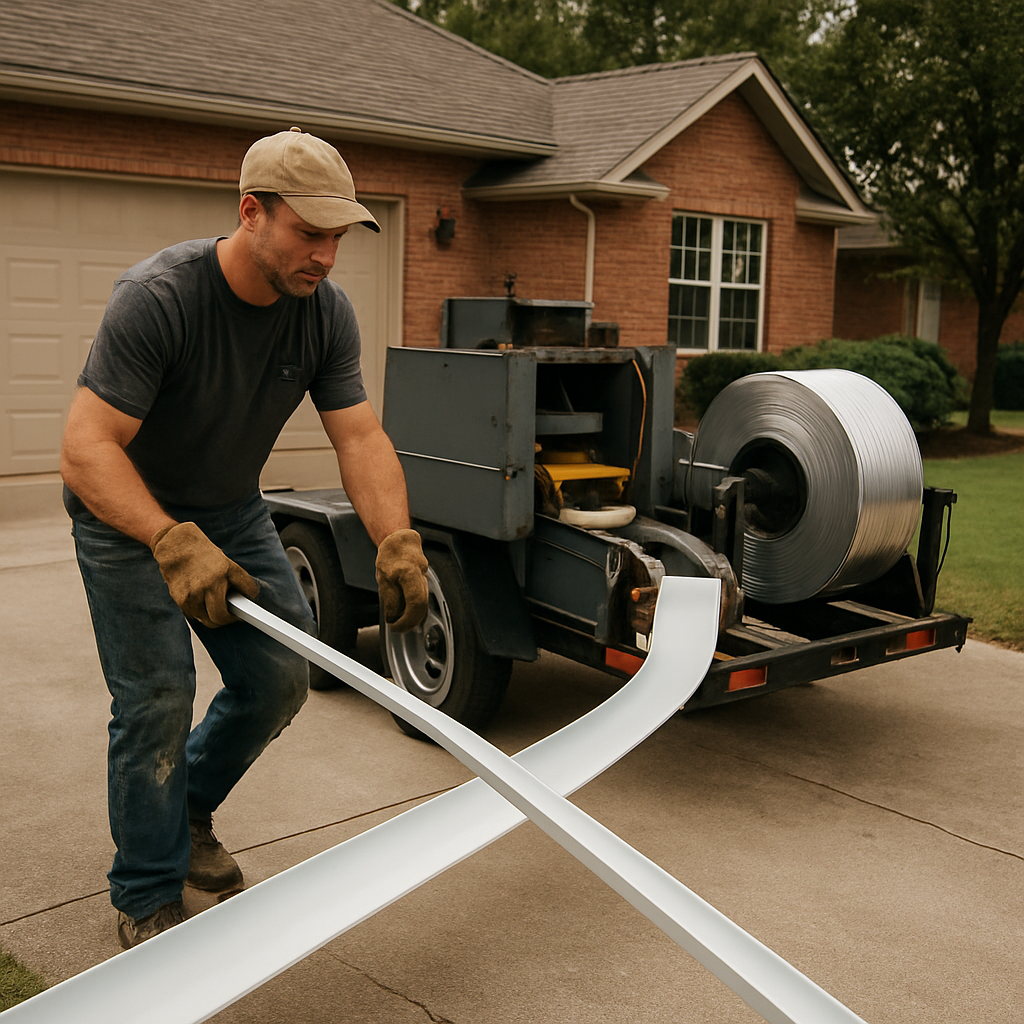
Today, seamless aluminum gutters are custom-fabricated right in your driveway. A professional contractor feeds flat coils of aluminum into a specialized roll-forming machine, instantly extruding continuous lengths of gutter that perfectly match the dimensions of your home’s roofline.
Benefits of a Seamless System
Fewer Leaks: With seams only existing at the corners and downspout drops, the risk of dripping water is virtually eliminated.
Enhanced Strength: The unbroken structure vastly improves the load-bearing capacity of seamless systems, allowing them to hold heavy snow, ice, and wet debris without bowing.
Improved Aesthetics: A smooth, continuous line running across your home’s eaves looks far more professional and aesthetically pleasing than a fragmented, sectional track.
While the initial seamless gutter installation cost is slightly higher than buying sectional pieces at a big-box store, the reduction in maintenance and repair costs over the years makes it a vastly superior financial choice.
Customizing Your Setup: Profiles, Gauges, and Finishes
Installing aluminum rain gutters isn’t a one-size-fits-all endeavor. You have the freedom to customize the system to match your home’s architectural style and your local climate’s demands.
Selecting the Right Style and Size
When choosing the shape of your gutters, the main debate usually comes down to k-style vs half-round profiles.
K-Style: This profile resembles crown molding and is highly popular for modern and traditional homes. Because of its flat back and rigid front edge, it holds significantly more water than a half-round gutter of the same width.
Half-Round: Shaped like a semi-circle, this profile is frequently used on historic or upscale rustic homes. While beautiful, it tends to hold less volume.
Standard gutters are typically 5 inches wide, but if you live in an area prone to torrential downpours, upgrading to 6-inch wide rain gutters is a smart move. The wider channel ensures high volumes of water are caught and directed away swiftly.
Gauge Thickness: Durability Matters
Not all aluminum is created equal. The thickness of the metal plays a crucial role in how well your system will hold up to physical stress, like heavy snow or a leaning ladder. The most common residential options involve a choice regarding the thickness of 0.027 vs 0.032 gauge.
0.027 Gauge: This is the standard builder’s grade. It is suitable for mild climates with minimal snowfall or overhanging trees.
0.032 Gauge: This heavy-duty option is highly recommended for homeowners looking for maximum durability. It resists denting and sagging far better than thinner alternatives.
Finishes and Aesthetics
Modern aluminum gutters are baked with high-quality factory coatings. This powder coated finish longevity ensures that your gutters won’t peel, blister, or fade prematurely under harsh UV rays. Furthermore, this thick layer of coating serves as an additional barrier for preventing rust and oxidation, keeping the color vibrant for decades.
Navigating the Installation Process
Whether you are an ambitious weekend warrior or plan to hire a professional crew, understanding the mechanics of installation ensures a long-lasting, reliable system.
Fasteners and Support
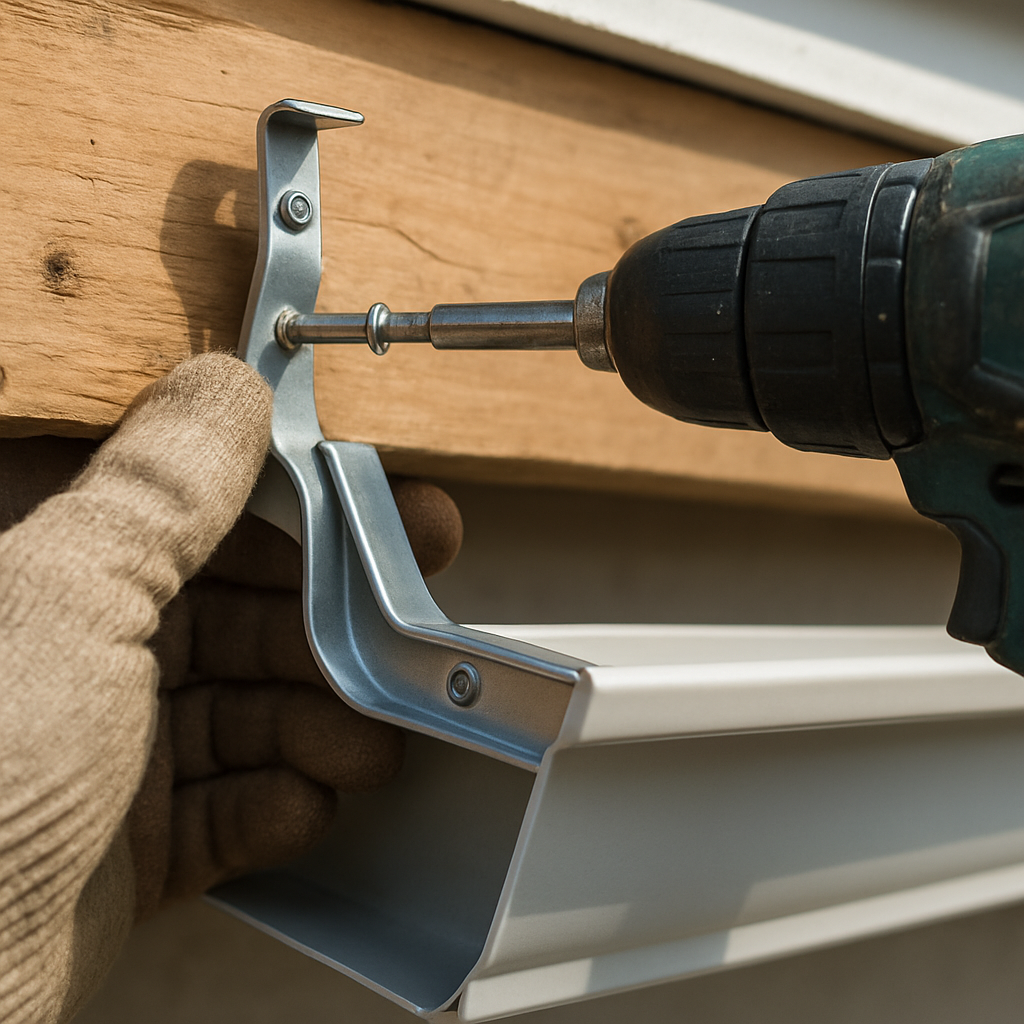
A gutter is only as strong as its mounting system. In the past, massive spikes and ferrules were driven through the front of the gutter into the wood, which looked unsightly and frequently pulled loose over time. Today, the industry standard relies on internal hangers.
Understanding the pros and cons of hidden fasteners is key.
Pros: They are completely invisible from the ground, offering a clean, sleek look. They also clip under the front lip and screw directly into the fascia, providing exceptional strength against heavy ice loads.
Cons: Because they are hidden, it can be slightly harder to spot if one has come loose during a routine visual inspection.
Properly securing hangers to fascia boards is the most critical step. The screws must penetrate deeply into the solid wood (or ideally, through the fascia and into the rafter tails) to guarantee the channel won’t tear away during a severe storm.
A Brief Guide for the Ambitious DIYer
While seamless systems require a professional machine, some homeowners still prefer to install sectional aluminum systems. If you are looking for a basic step-by-step diy hanging guide, keep these core principles in mind:
Plan the Slope: Gutters must slope downwards toward the downspout to prevent standing water. A standard rule is a ¼-inch drop for every 10 feet of gutter.
Mark Your Lines: Snap a chalk line on the fascia board to ensure your slope is perfectly straight.
Attach Hangers First: Clip your hidden fasteners into the gutter sections approximately every 24 inches before lifting them up.
Mount and Secure: Lift the sections, align them with your chalk line, and drive the screws through the back of the gutter into the fascia board.
Seal the Seams: Use a high-quality, exterior-grade gutter sealant on all end caps, drops, and joined pieces.
Maximizing Performance and Longevity
Installing your system is only the first half of the battle; maintaining its efficiency is the second.
Capacity and Drainage
Even the widest gutter will fail if the downspouts are too small. Properly calculating downspout drainage capacity guarantees that water moves from the roof to the ground without backing up. A standard 2×3-inch downspout can handle about 600 square feet of roof area, whereas a larger 3×4-inch downspout can handle up to 1,200 square feet. Ensure you have enough downspouts placed strategically around your home to handle your roof’s specific square footage.
Managing Debris and Harsh Weather
Leaves, pine needles, and shingle grit are the natural enemies of roof drainage. To minimize tedious ladder climbs, consider investing in the best leaf guards for heavy rain. Micro-mesh aluminum gutter guards are highly recommended because they allow high volumes of water to pass through while blocking debris as small as sand.
Winter weather presents a unique set of challenges, making preventing ice dams in roof drainage a top priority. Ice dams form when warm air from your attic melts roof snow, which then refreezes upon hitting the cold eaves and gutters. To prevent this, ensure your attic is properly insulated and ventilated. Additionally, keeping your aluminum gutters completely clear of debris before the first freeze ensures that melting snow can flow away freely rather than pooling and freezing solid.
Routine Upkeep
Even the highest quality systems occasionally need a little TLC. If you notice a drip coming from a corner section, repairing leaking miter joints is a simple fix. Wait for a dry day, thoroughly clean out the inside of the corner joint with a wire brush, wipe it down with rubbing alcohol, and apply a generous bead of self-leveling aluminum gutter sealant.
The True Lifespan of an Aluminum Gutter System
When weighing your home improvement options, longevity is a defining factor. So, what is the expected lifespan of residential metal gutters?
With routine cleaning and basic maintenance, a high-quality, thick-gauge aluminum gutter system can easily last 20 to 30 years. The powder-coated finish will retain its look for decades, and because aluminum resists rust, the structural integrity remains uncompromised even in wet, humid climates. When compared to the short 10-year lifespan of vinyl, aluminum provides an exceptional return on investment.
Conclusion
Upgrading to an aluminum rain drainage system is one of the smartest, most cost-effective decisions you can make to protect your property. From their incredible durability and rust resistance to the superior load-bearing capacity of modern seamless installations, aluminum gutters offer true peace of mind.
By carefully selecting the right gauge, choosing between k-style vs half-round profiles, ensuring proper fascia mounting, and adding protective leaf guards, you are building an exterior defense system that will shield your home for decades. Don’t wait for the next torrential downpour to reveal the flaws in your current setup—invest in high-quality aluminum gutters today and keep your home safe, dry, and looking its absolute best.
Newsletter Updates
Enter your email address below and subscribe to our newsletter