Before You Go — Get BRAND BOA Updates Top Products, Shed Plans & Estimating Tips
Join homeowners, DIY builders & contractors
Subscribe to receive construction product recommendations, shed plan updates, BOQ tips, and useful buying guides for tools, materials, finishes, and building essentials. We’ll help you discover selected products from trusted USA suppliers and share practical ideas to plan, price, and build smarter.
Whether you are a seasoned contractor tackling a large commercial project or a dedicated DIY homeowner upgrading your outdoor space, the foundation of your success relies entirely on your building materials. Among the most critical choices you will make is how you source and utilize your concrete.
Choosing ready mix concrete over traditional on-site mixing offers unparalleled advantages in quality, efficiency, and cost. In this comprehensive guide, we will explore the core benefits of using ready mix, dive into site preparation, and offer actionable tips to ensure your next pour is flawless.
What is Ready Mix Concrete?
Ready mix concrete is a tailor-made material manufactured in a batch plant according to a specific recipe, then delivered to a work site in a transit mixer (the classic revolving drum truck). Because the mixing happens under highly controlled conditions, this premix concrete guarantees a level of precision that is nearly impossible to replicate with a wheelbarrow and a shovel.
When deciding between pre-mixed bags vs transit delivery, the scale of your project is the deciding factor. Pre-mixed bags are excellent for securing a mailbox post or patching a small sidewalk crack. However, for anything larger than a few square feet, transit delivery is superior. When it comes to bulk, structural concrete, ready mix concrete eliminates the backbreaking labor of opening hundreds of bags and ensures a uniform blend from the first drop to the last.
The Top Advantages of Ready Mix Concrete
1. Unmatched Quality and Consistency
The most significant benefit of ready mix is quality control. Batch plants use sophisticated computer systems to weigh the exact ratios of cement, aggregate, water, and sand.
Precision Strength: You can order a precise concrete compressive strength PSI (Pounds per Square Inch) tailored to your project’s needs. A standard patio might require 3,000 PSI, whereas a heavy-duty garage floor may demand 4,000 PSI or more.
Uniformity: Upon arrival, the driver can perform a slump test for consistency. This test measures the workability of the fresh mix, ensuring it is neither too dry to pour nor too wet, which would compromise its final structural integrity.
2. Time and Labor Savings
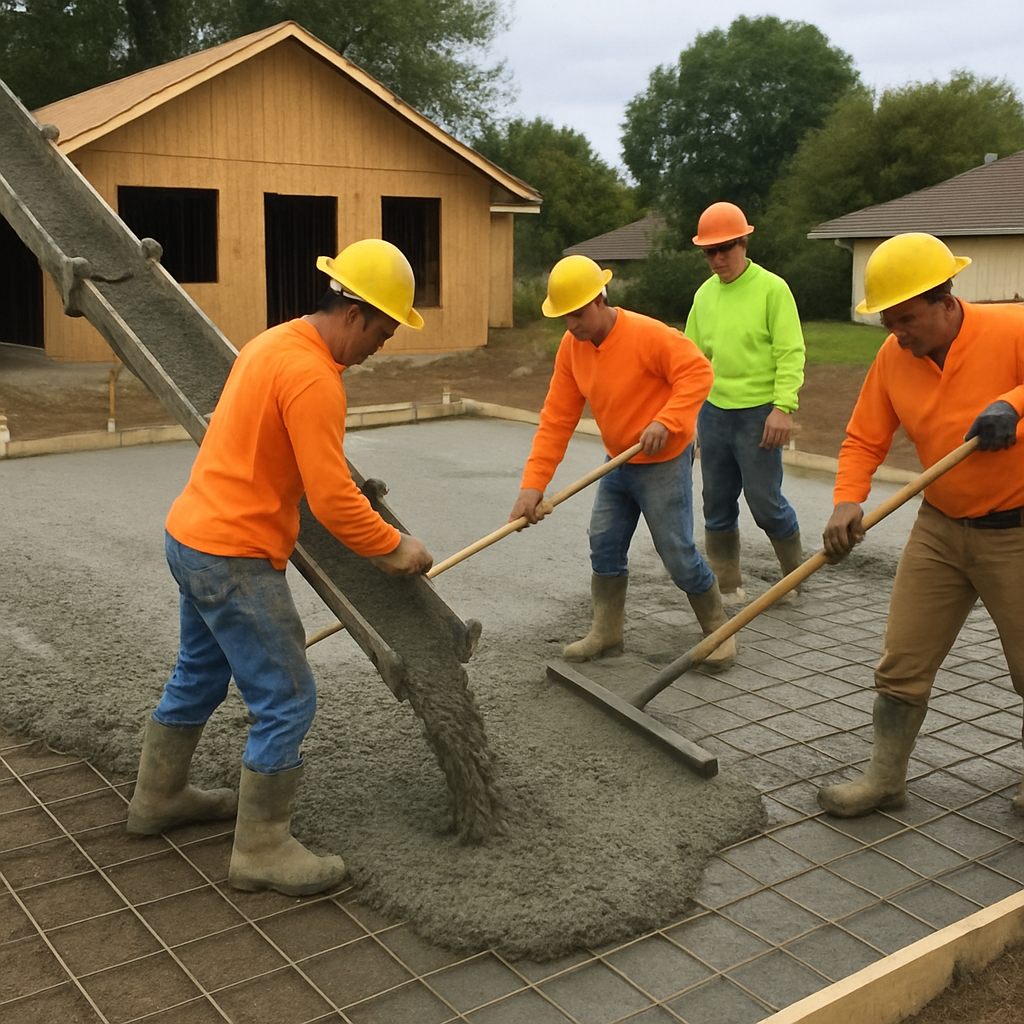
Time is money on any construction site. Mixing concrete manually is incredibly labor-intensive and slow, which can lead to “cold joints” where one batch dries before the next is poured alongside it. When pouring a residential foundation, a continuous, rapid pour is vital for structural integrity. A transit truck can pour yards of concrete in minutes, freeing up your crew to focus on spreading, screeding, and finishing.
3. Cost-Effectiveness
While there is a delivery fee associated with ready mix, the economy of scale makes it highly cost-effective for medium to large jobs. By minimizing labor hours and eliminating the waste associated with storing bulk raw materials on-site, the overall project costs decrease. The average price per cubic yard fluctuates based on your region and the specific mix design, but it remains one of the most cost-efficient building materials available per square foot of structural support.
Advanced Mixing: Customizing Your Concrete
One of the hidden benefits of ordering from a plant is the ability to customize the batch chemistry. Modern ready mix isn’t just mud and rocks; it is a highly engineered product.
Enhancing Workability and Durability
Depending on your project’s unique demands, suppliers can add various enhancements to the mix:
Admixtures: By utilizing chemical admixtures for workability, the plant can make the concrete flow easier without adding excess water (which would lower the PSI).
Fibers: For expansive slabs like driveways and patios, requesting reinforcement fibers for crack prevention is a smart investment. These tiny synthetic or steel fibers intertwine within the mix, drastically reducing surface-level shrinkage cracks.
Specialty Mixes: If you are building a sub-base for a road or leveling a deep trench, you might utilize wet lean mix applications. This low-cement ratio mix is incredibly economical and provides a firm, rigid base for the primary pour.
The Volumetric Alternative
In some cases, you might opt for a volumetric mixer instead of a traditional drum truck. The volumetric concrete mixer benefits include having the dry materials and water stored in separate compartments on the truck, mixing exactly what you need on-site. This eliminates the worry of over-ordering and allows for real-time adjustments to the mix design.
Preparation and Ordering Logistics
A successful concrete pour is 80% preparation and 20% execution. Before the truck even leaves the plant, you need a solid plan in place.
Finding the Right Supplier
Start by searching online for “concrete plants near me”. You might also try queries like “concrete near me” or “cement near me” (though remember, cement is just the binding ingredient in concrete!). Look for suppliers with strong local reviews, transparent pricing, and robust customer service, as they will help guide you through the ordering process.
Calculating Your Needs
Running out of concrete halfway through a pour is a nightmare. Before calling the plant, you must calculate cubic yards for driveway, patio, or slab projects accurately.
The Formula: Measure your area’s Length and Width in feet. Determine the Depth in inches, then convert that to feet (e.g., 4 inches = 0.33 feet). Multiply Length × Width × Depth to get cubic feet. Finally, divide by 27 to get cubic yards.
Pro Tip: Always order 10% more than your calculation to account for uneven subgrades and slight spillage.
Preparing the Site
Your concrete is only as strong as what lies beneath it. Proper subgrade preparation for heavy loads is non-negotiable for driveways or foundations.
Excavation: Remove all topsoil, roots, and organic matter.
Base Layer: Lay down 4 to 6 inches of crushed gravel or limestone.
Compaction: Use a plate compactor to press the base into a solid, unyielding surface. This prevents the ground from settling and cracking your slab later.
Navigating Delivery Day
Once your site is prepped and the forms are braced, delivery day requires careful coordination.
Managing Time Limits
Concrete is a perishable product. According to industry standards (ASTM C94), there are strict discharge time limits after batching. Generally, the concrete must be entirely discharged from the truck within 90 minutes, or before the drum reaches 300 revolutions, whichever comes first. Delays on your end can result in rejected loads, so ensure your crew is ready the moment the truck arrives.
Accessibility and Pumping
Transit trucks are incredibly heavy and require wide, stable access. If your pour site is located in a backyard or behind an existing structure, the truck won’t be able to reach it directly. In this scenario, you will need a boom pump or line pump. When setting this up, be aware of standard concrete pump truck rental requirements:
A clear, level staging area for the pump truck’s outriggers.
Strict clearance from overhead power lines.
Adequate washout space for the pump operator to clean the hopper after the job.
Best Practices for Pouring and Curing
The moment the concrete leaves the chute, the clock is ticking.
Navigating Extreme Weather
Weather plays a massive role in concrete behavior. If you are pouring cement in cold weather (below 40°F), the water in the mix can freeze before it bonds with the cement. To combat this, plants can use hot water in the batching process or add accelerating admixtures. After the pour, you must cover the slab with insulated curing blankets to trap the chemical heat generated by the mix.
Conversely, in extremely hot weather, the water may evaporate too quickly, leading to severe shrinkage cracks. In these cases, retarding admixtures can slow down the setting time, giving your crew ample time to finish the surface.
The Science of Curing
Many people assume concrete “dries” to get hard. In reality, it cures through a chemical reaction called hydration. The hydration process and curing time dictate the ultimate lifespan of your slab.
Immediate Care: As soon as the surface is finished, it must be kept moist. You can spray a liquid curing compound, cover it with plastic sheeting, or mist it with a hose for several days.
Timeline: Concrete is generally safe to walk on after 24 to 48 hours and can handle light vehicle traffic after 7 days. However, it takes a full 28 days to reach its maximum engineered compressive strength. Rushing this process or allowing the concrete to dry out too fast will weaken the final product.
Conclusion
Opting for ready mix concrete streamlines the construction process, drastically cuts down on grueling manual labor, and ensures an exact, scientifically backed structural material for your property. By understanding the intricacies of compressive strength, the benefits of specialized admixtures, and the strict logistics of delivery day, you set your project up for decades of durability.
Whether you are pouring a massive residential foundation or laying out a beautiful new stamped patio, careful planning—from meticulous subgrade preparation to proper curing practices—will ensure your ready mix investment stands the test of time. Reach out to a reputable local plant today, finalize your calculations, and get ready for a smooth, successful pour.
Newsletter Updates
Enter your email address below and subscribe to our newsletter