Before You Go — Get BRAND BOA Updates Top Products, Shed Plans & Estimating Tips
Join homeowners, DIY builders & contractors
Subscribe to receive construction product recommendations, shed plan updates, BOQ tips, and useful buying guides for tools, materials, finishes, and building essentials. We’ll help you discover selected products from trusted USA suppliers and share practical ideas to plan, price, and build smarter.
You’ve picked out the perfect hardwood flooring, but that retail price tag just wrecked your entire kitchen budget. Professional contractors rarely pay those premium prices for their everyday supplies. Industry data reveals that builders consistently bypass fancy big-box showrooms to score major deals.
Stepping away from traditional stores opens up a hidden world of discount building materials. Finding a true construction discount means knowing the difference between low-quality trash and premium surplus goods. According to retail liquidation trends, manufacturers constantly sell perfect, high-quality overstock cheap just to clear warehouse space.
Mastering how to save money on home renovation materials turns your stressful budget into a solvable puzzle. Secondary markets provide those missing pieces, routinely offering 30 to 70 percent off standard retail prices. Your dream kitchen suddenly becomes an affordable reality once you realize big-box store prices aren’t your only option.
Cracking the Code on ‘Misfit’ Materials: What Overstock and B-Grade Actually Mean
Would you pay $300 less for hardwood flooring just because the manufacturer changed their packaging? This is the secret behind overstock items, representing the absolute gold standard of discount building. Like a clothing store’s clearance rack, overstock materials are structurally perfect but simply take up too much warehouse space. Often, a discontinued color or outdated logo means suppliers will slash prices to move perfectly good inventory.
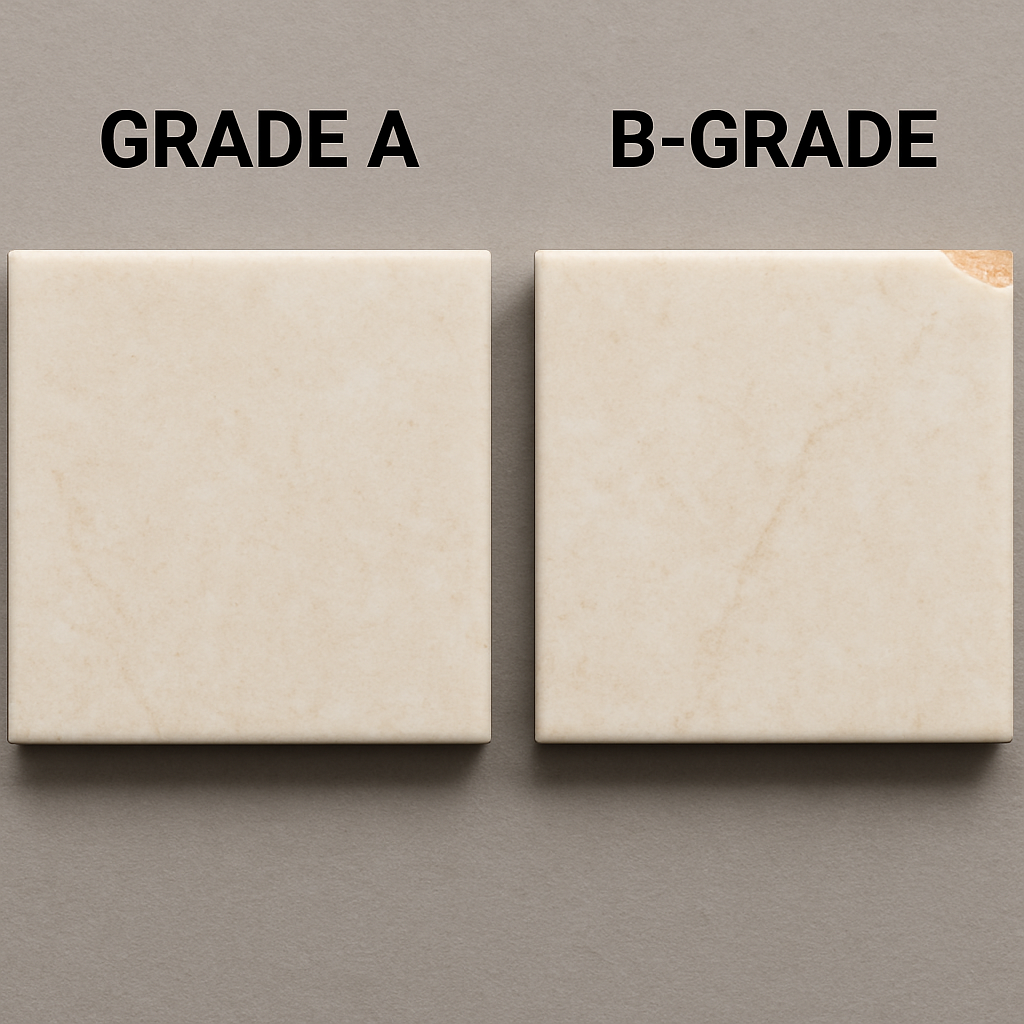
Sometimes, deep discounts come directly from the manufacturing line itself. When buying factory second building products—also known as B-Grade materials—you are looking for cosmetic “birthmarks.” These are fully functional items with tiny visual freckles, like a microscopic scratch on a bathroom vanity or a slight color variation in vinyl siding.
The golden rule for sourcing inexpensive building materials is separating the skin from the skeleton. A minor corner chip on a ceramic tile (the skin) disappears completely under grout, saving you a fortune. However, a deep crack running through a load-bearing wooden post (the skeleton) is a structural safety risk you must immediately walk away from.
Next time you visit a supplier, specifically ask the manager if they have any hidden B-Grade inventory. Recognizing these “misfit” labels opens up incredible savings, provided you shop strategically. This brings us to the crucial difference between liquidators and retailers.
Liquidators vs. Retailers: Why Your Local Warehouse Beats the Big Box Store
Walking into a traditional home center guarantees bright lights and fancy displays, but you pay a premium for that comfort. When comparing surplus stores vs big box retailers, the defining difference is overhead. Construction surplus liquidators operate out of bare-bones, no-frills warehouses, meaning those showroom savings go directly into your pocket. The trade-off is that you are usually buying “as-is” without traditional manufacturer warranties, making it essential to thoroughly inspect items before driving away.
Let’s look at the math proof for sourcing wholesale home improvement supplies. Without retail markups, your renovation dollars stretch significantly further on universal basics. Consider this typical project savings breakdown:
Backsplash Tile (per sq. ft.): Retail $12.00 vs. Surplus $4.00
Because inventory changes daily, you should always target three specific items at these warehouses: flooring, cabinet hardware, and lighting fixtures. These universally needed goods carry massive retail markups, offering the highest return on investment for a flexible shopper. If your local liquidator doesn’t have your preferred style today, you still aren’t forced to return to retail pricing. This flexibility prepares you for the digital scavenger hunt: scoring construction surplus online.
The Digital Scavenger Hunt: Scoring Construction Surplus Online
You can score high-quality leftovers right from your couch by hunting for discount building materials online. Sticking to local digital marketplaces is essential because heavy items cost a fortune to ship. Keeping your search close to home guarantees freight charges won’t erase your savings.
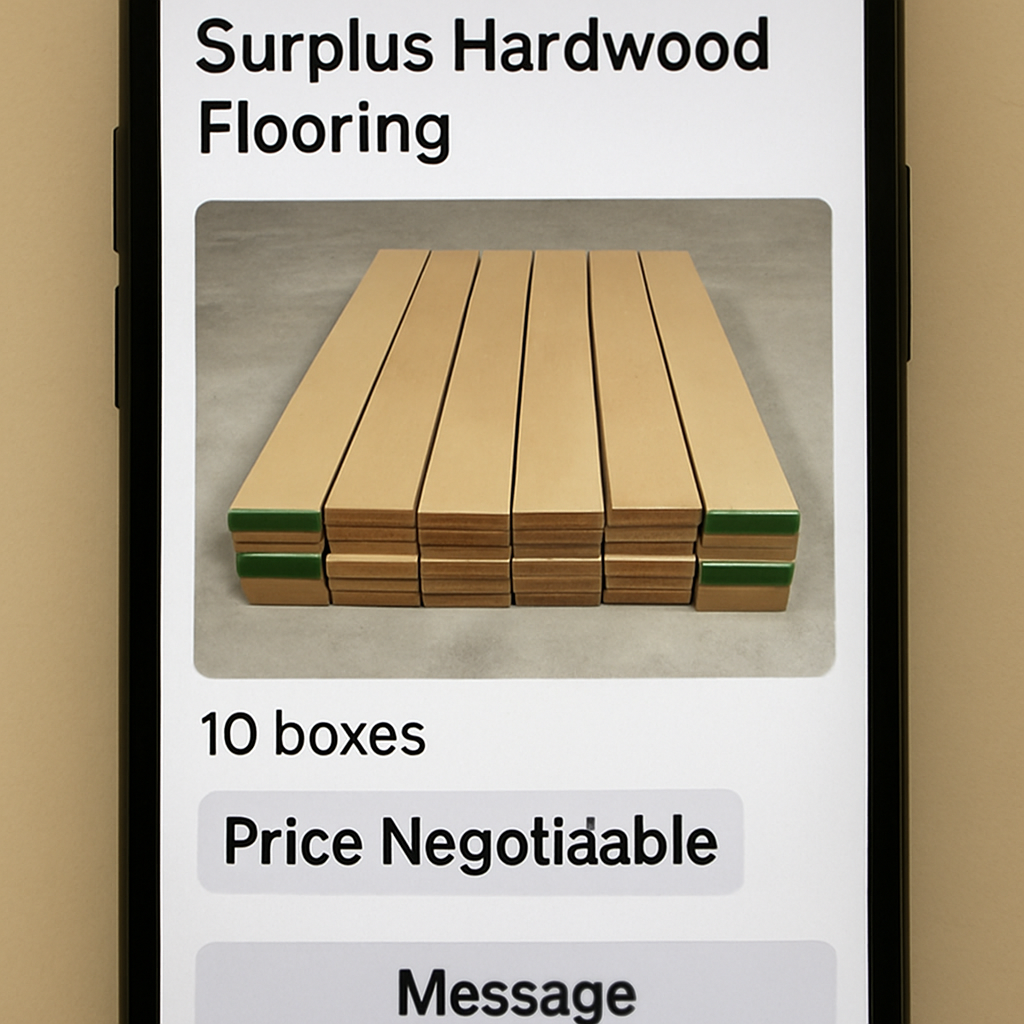
Contractors constantly finish jobs with extra supplies they sell as a “lot.” A lot simply means buying an entire group of items together for one flat price. Searching “surplus lot” locally is the secret to sourcing cheap drywall and flooring. You just have to be willing to buy the whole pile.
Locating end-of-line flooring clearance inventory is just like shopping a retail clearance rack. The product is perfect, but the factory discontinued the color. Since these sales are strictly “as-is,” always ask if the boxes were stored safely indoors. Never pay until you inspect the materials in person for hidden water damage.
Those massive digital discounts are perfect for cosmetic skin finishes, but you shouldn’t gamble on the structural skeleton of your house. Before loading your truck, you must learn to identify real material hazards, particularly when evaluating discounted lumber.
Is B-Grade Lumber Safe? When to Save Cash and When to Spend Full Price
Wondering if it is safe to use b-grade lumber for your upcoming project? The answer relies entirely on the “Skeleton vs. Skin” rule. If the wood supports heavy weight like floor joists—your home’s skeleton—always buy pristine, full-priced wood. However, if the wood is for the “skin” or non-load-bearing projects like garden beds, confidently visit a discount builders supply.
Retailers constantly toss imperfect 2x4s into a discount bin known as “cull lumber.” This marked-down wood provides incredibly affordable lumber for diy projects, provided you inspect it properly. Run through this ‘Safe vs. Risky’ checklist before checking out:
Knots: Safe if small and tight; risky if they are loose or leave gaping holes.
Bowing: Safe for short cuts like shelving; risky for long, straight wall framing.
Wane: Safe if the missing bark edge is hidden; risky if you need perfectly square corners.
Moisture Content: Safe if dry; risky if the wood feels unusually heavy or damp.
Embracing these minor cosmetic defects can easily slash your lumber bill by 50%. Once you master picking safe wood, you can confidently explore other secondary markets, including architectural salvage yards.
The Treasure Hunt at ReStores: Turning Salvaged Goods into Custom Renovations
Stepping into architectural salvage yards for renovations feels like a genuine treasure hunt. Instead of sterile aisles of identical products, these donation-based centers offer unique, gently used goods salvaged from other homes. When contractors demolish perfectly good kitchens for wealthy clients, those items often land here. Buying eco-friendly salvaged construction materials keeps tons of usable goods out of local landfills while drastically slashing your project budget.
Solid wood doors, complete cabinet sets, and heavy vintage hardware offer the biggest savings in these warehouses. If you spot a gorgeous antique door, do not worry if the metal hinges misalign with your current frame. Simply use the “re-hanging” trick: fill the old hinge cutouts with wood putty, sand the edge flat, and cut fresh notches that perfectly match your existing doorway.
Effective habitat for humanity restore shopping tips always include visiting often and bringing a tape measure. Inventory changes daily, so grab that custom oak vanity immediately before a contractor beats you to it. Finding these unique focal points is thrilling, but covering massive room dimensions requires a different approach. Once your custom pieces are secured, confidently buying larger bulk materials requires a strict quality check.
The 5-Point Quality Check: Ensuring Your Discount Flooring Isn’t a Waste of Money
Landing a huge building supplies discount is thrilling, but warehouse pallets hide a costly secret. Always check the “run numbers” printed on the boxes before purchasing. Manufacturers slightly change dye colors between production batches, meaning mixing boxes creates a mismatched, patchwork floor. “Lot matching”—buying only identical run numbers—guarantees your room shares the exact same tone, safely cutting costs on residential construction projects.
Cosmetic flaws save money, but structural damage ruins installations. When inspecting liquidated masonry supplies, check for deep cracks that split the stone. Surface chips are fine, but broken “skeletons” are useless. For snap-together flooring, test the click-lock integrity immediately. Pull out two planks and lock them together in the aisle; if those tiny connecting grooves are crushed, leave the box behind.
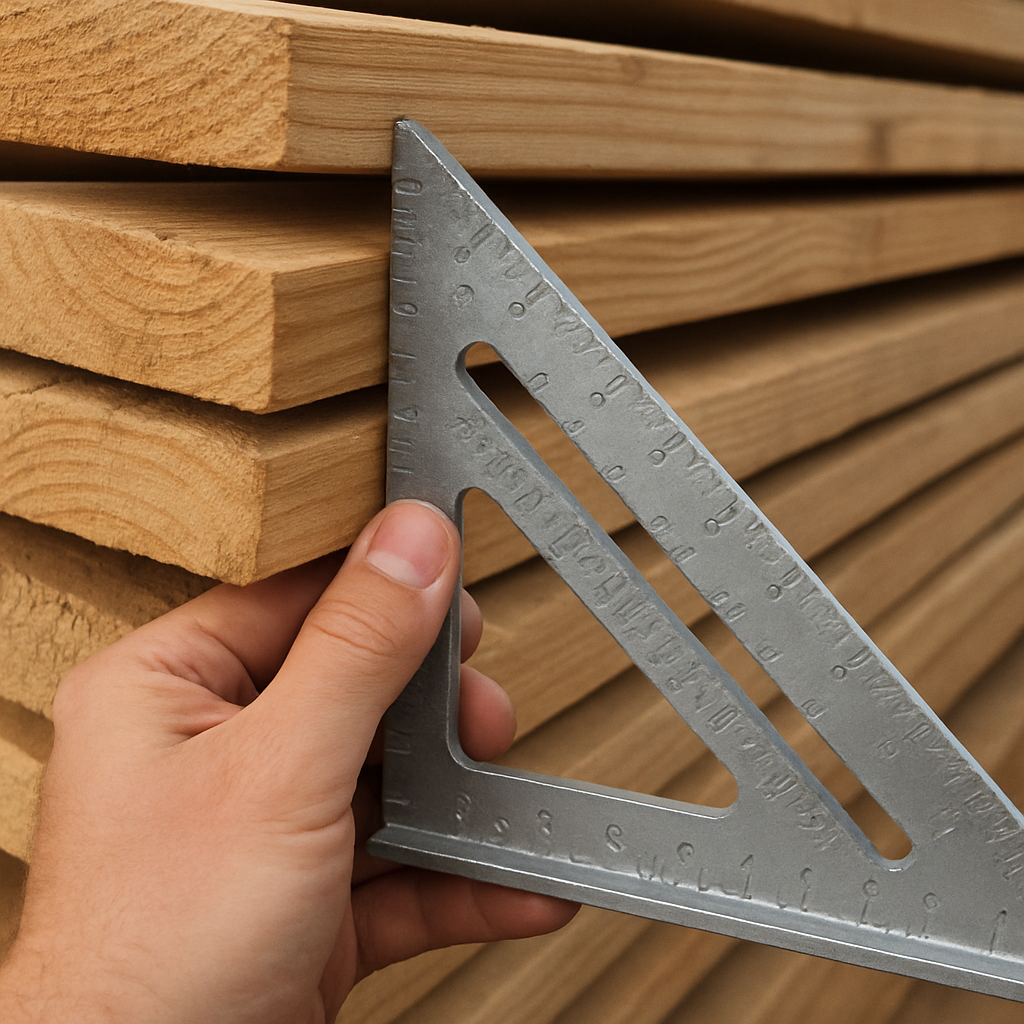
Since discount storage often lacks climate control, hidden humidity secretly warps materials. Always pack the ‘Buyer’s Essential Inspection Toolkit’ to catch damage:
Tape measure
Square
Moisture meter
Sample piece
Armed with this checklist, you can easily distinguish profitable bargains from expensive disasters, clearing the path to execute your renovation roadmap.
Your $1,000 Renovation Roadmap: Starting Your Affordable Building Journey Today
Armed with insider knowledge, you can confidently navigate the hidden secondary market of discount building materials. Start small to build your confidence, perhaps by hunting down a unique bathroom vanity or an open-box kitchen backsplash.
Your immediate next step is to map out a monthly “surplus route” of local liquidators, salvage yards, and ReStores. As you browse the aisles, practice evaluating recycled vs new building components by relying on the “Skeleton vs. Skin” rule. If the structural bones are perfectly solid and the flaw is purely cosmetic, you have found a winner. This simple habit allows you to confidently distinguish between a genuinely good deal and a bad material.
Armed with these practical home renovation tips, you can now execute an upgrade for 30 to 50 percent less than your original estimate. Think about the math: the $750 you saved on tile is your new kitchen appliance budget. That is the true, empowering reward of smart project sourcing.
Newsletter Updates
Enter your email address below and subscribe to our newsletter