Before You Go — Get BRAND BOA Updates Top Products, Shed Plans & Estimating Tips
Join homeowners, DIY builders & contractors
Subscribe to receive construction product recommendations, shed plan updates, BOQ tips, and useful buying guides for tools, materials, finishes, and building essentials. We’ll help you discover selected products from trusted USA suppliers and share practical ideas to plan, price, and build smarter.
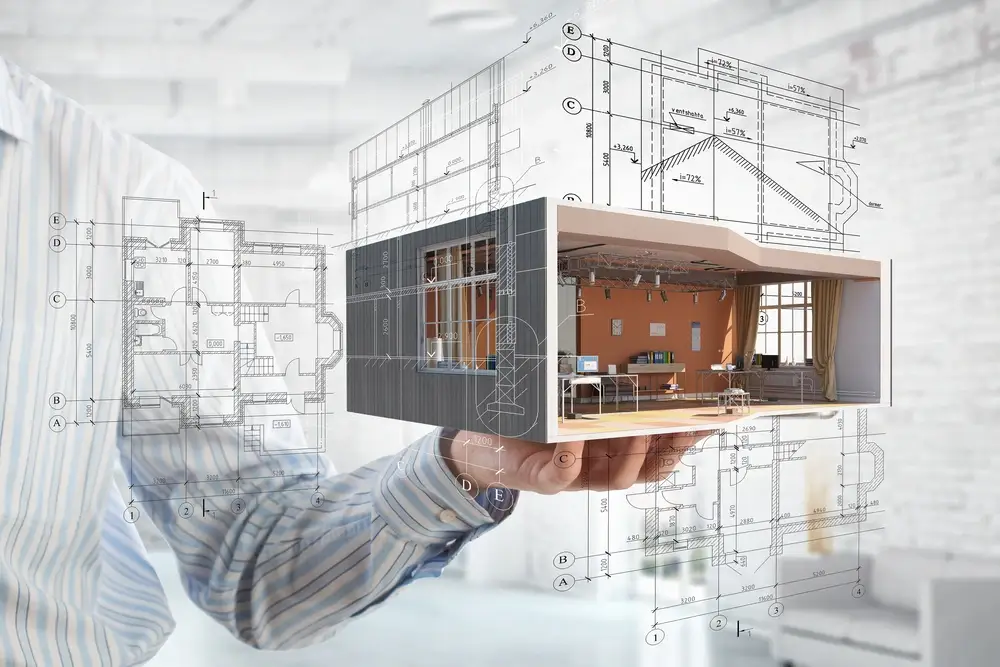
Every skyscraper, bridge, or residential complex starts with a blueprint. But beyond the architectural drawings and engineering schematics, the true foundation of any successful build is a robust construction project management plan.
Whether you are overseeing a boutique commercial build or a massive public infrastructure initiative, diving in without a structured roadmap is a guaranteed recipe for chaos. A well-crafted plan acts as your north star, aligning your team, resources, and stakeholders toward a single, successful outcome.
This comprehensive project management guide will walk you through the essential elements required to keep your build on time, within budget, and up to the highest industry standards.
What is a Construction Project Management Plan?
At its core, a construction project management plan is a formal, approved document used to guide both project execution and project control. Often referred to as a project execution plan, this overarching document defines how the project will be initiated, planned, executed, monitored, and finally closed.
To visualize this, consider a typical construction project management plan example: building a new 10-story office block. The plan for this build wouldn’t just state the final goal. It would meticulously outline everything from the initial site excavation to the final HVAC installation, dictating exactly who is doing what, when they are doing it, and how much it will cost.
To create a master plan that actually works in the field, you need to incorporate several foundational elements.
1. Defining Scope, Deliverables, and Work Breakdown
Before you pour a single yard of concrete, you must establish exactly what you are building. Developing a construction project scope of work is the first and most critical step. A clear scope document details the project’s objectives, boundaries, and specific requirements. It is your primary defense against “scope creep”—the slow, unauthorized expansion of project parameters that drains budgets and delays schedules.
To clarify the scope, you must clearly define the end results. If stakeholders are asking, “what are construction project deliverables?” you should be able to point to tangible, measurable outputs. Deliverables can be phased—such as a completed foundation, framed walls, or a finished roof—or they can be final, like the handover of the keys and the final occupancy permit.
Once the deliverables are defined, it’s time to get granular. Creating a work breakdown structure for building projects (WBS) allows you to decompose the total scope into smaller, highly manageable components.
Level 1: The entire project (e.g., Office Building).
Level 2: Major phases (e.g., Excavation, Foundation, Framing, Finishing).
Level 3: Specific tasks (e.g., Pouring footings, curing concrete).
2. Master Scheduling and Time Management
Time is money in construction, and a delayed timeline quickly eats into profit margins. Knowing exactly how to create a construction schedule is the heartbeat of your project management strategies.
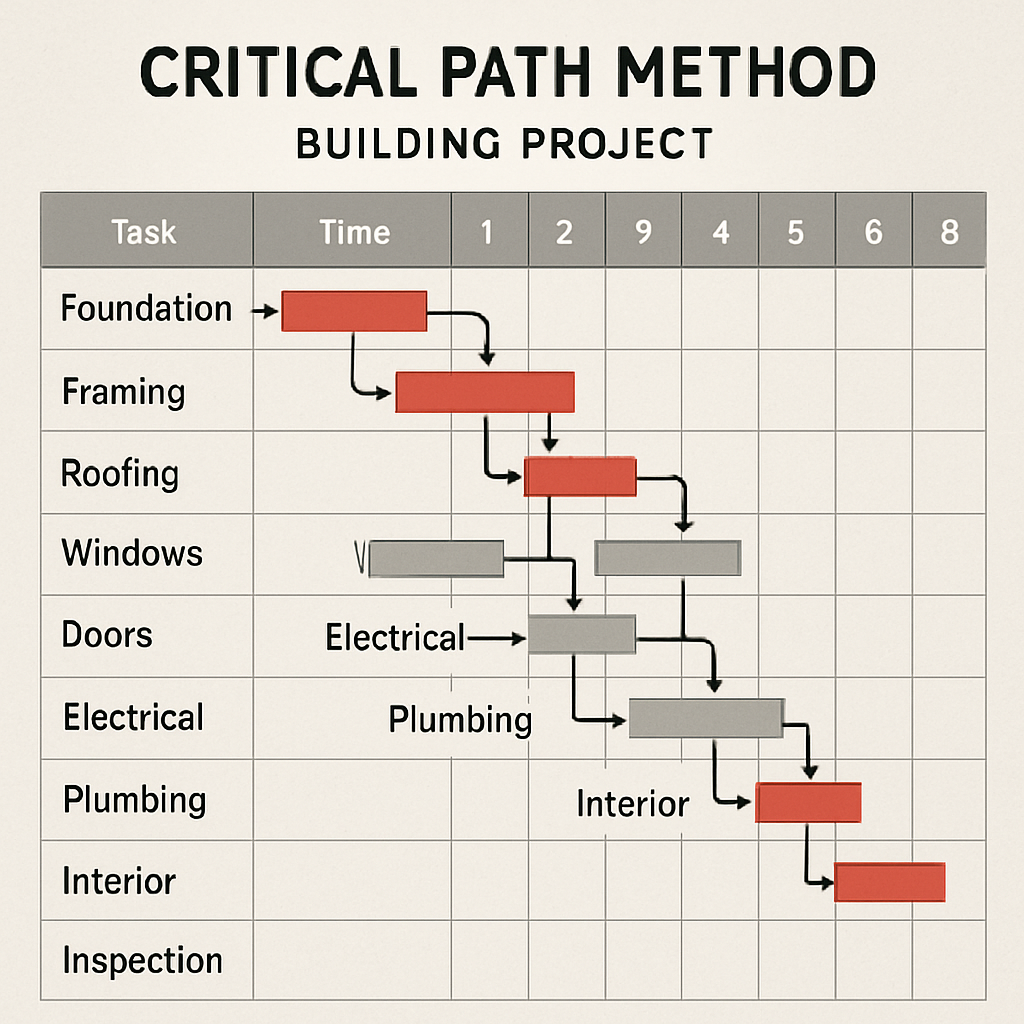
A standard schedule doesn’t just list dates; it maps out dependencies. This is where leveraging the critical path method for construction projects becomes invaluable. The critical path identifies the longest stretch of dependent activities and measures the time required to complete them from start to finish. If any task on the critical path is delayed, the entire project is delayed.
Of course, delays are a reality of the industry. Implementing proven strategies for reducing construction project delays will keep your critical path intact:
Build in weather buffers: Always account for historical weather data in your timeline.
Order long-lead items early: Procure custom materials months in advance.
Hold weekly look-ahead meetings: Review the upcoming 3 to 4 weeks with subcontractors to identify scheduling conflicts before they occur.
3. Budgeting, Contracts, and Resource Allocation
Financial control is the pillar that holds up your entire project. Your plan must include a detailed budget that covers labor, materials, equipment, permits, and overhead.
However, establishing a budget is only half the battle; knowing how to manage construction project budget overruns is where true project leadership shines. To mitigate financial risk, always include a contingency fund (usually 10-20% of the total budget). Track expenses weekly rather than monthly, so you can catch and correct overspending immediately.
Your financial strategy will also be heavily influenced by your choice of contracts. Understanding the difference between lump sum vs cost plus contracts is essential. A lump sum contract provides a single fixed price for all work, placing the risk of cost overruns on the contractor. Conversely, a cost plus contract ensures the contractor is paid for all construction expenses plus a specific percentage for profit, which offers flexibility but requires the owner to monitor spending closely.
Parallel to the budget is your construction resource allocation strategy. This involves assigning the right personnel, machinery, and materials to specific tasks at precisely the right time. Efficient resource allocation ensures that highly-paid specialists aren’t waiting around for materials to arrive, and expensive rented machinery isn’t sitting idle on the lot.
4. Procurement and Waste Management
Sourcing materials requires precision. Following the proper steps for construction procurement management guarantees that you have what you need, when you need it, without overpaying. These steps generally include:
Identification of Needs: Using the WBS to list required materials and services.
Vendor Selection: Gathering bids and vetting suppliers for reliability.
Negotiation and Contracting: Finalizing pricing, delivery dates, and quality standards.
Monitoring and Receiving: Tracking shipments and inspecting materials upon arrival.
In today’s eco-conscious world, procurement goes hand-in-hand with sustainability. Developing a comprehensive waste management plan for a construction project is no longer optional—it is a regulatory and financial necessity. A good waste plan identifies materials that can be reused (like clean fill dirt), materials that can be recycled (like steel, concrete, and cardboard), and safe disposal methods for hazardous waste. This not only keeps the site clean but can also reduce tipping fees and contribute to green building certifications like LEED.
5. Risk, Quality, and Site Safety
Construction is inherently dangerous and unpredictable. Mitigating risks in large scale construction requires a proactive approach. Your plan should feature a dedicated Risk Register—a document that identifies potential threats (e.g., supply chain strikes, severe weather, labor shortages), assesses their likelihood and impact, and outlines specific mitigation plans.
Equally important is the importance of quality control in building. A fast project is useless if the work is sub-par. Quality control (QC) ensures that all work meets the standards defined in the scope and complies with local building codes. Implement regular inspections, use standard checklists for all phases of work, and refuse to accept substandard work from subcontractors. Doing it right the first time eliminates the massive costs associated with rework.
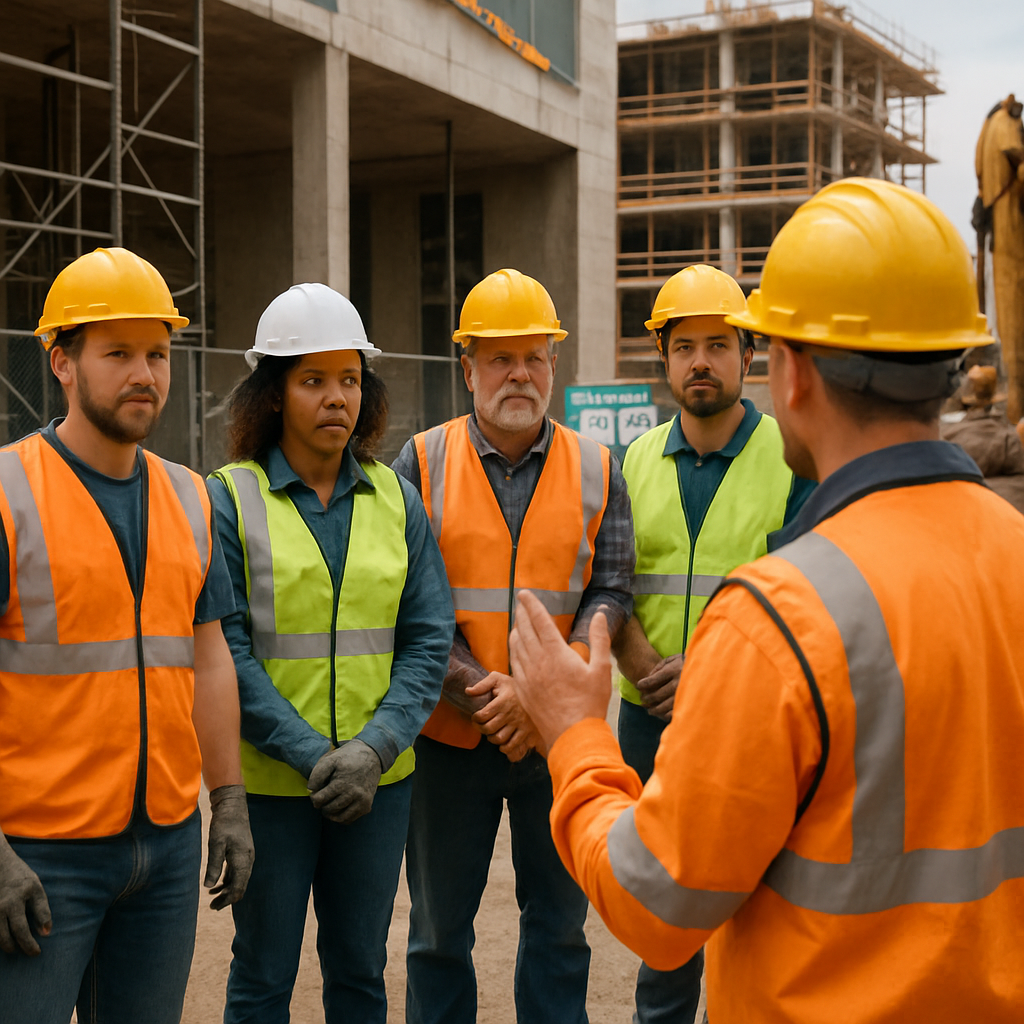
Furthermore, human life and health must always take precedence. Establishing strict building site safety and compliance protocols protects your workers and shields your company from crushing legal liabilities. This includes mandatory PPE (Personal Protective Equipment), daily safety briefings (toolbox talks), clear signage, and strict adherence to OSHA (or local equivalent) standards.
6. Stakeholder Communication
A construction project is a symphony of different voices: clients, architects, engineers, city inspectors, and specialized subcontractors. A formalized stakeholder communication plan for contractors ensures that everyone is singing from the same sheet of music.
Your communication plan should define:
Who needs information (e.g., the client needs budget updates; the framing crew needs structural drawings).
What information they need.
How often they will receive it (daily site logs, weekly progress meetings, monthly financial reports).
What channels will be used (emails, dashboard updates, in-person meetings).
Transparent communication builds trust and prevents minor misunderstandings from evolving into costly legal disputes.
7. Leveraging Modern Technology
The days of managing complex builds on physical whiteboards are over. When evaluating project management tools, the debate of construction management software vs excel spreadsheets is a short one. While Excel is a powerful tool for basic calculations, it lacks the real-time collaboration, automated workflows, and integration capabilities required for modern construction.
Dedicated construction management software (such as Procore, Buildertrend, or Fieldwire) allows teams to update the schedule in real-time from a mobile device in the field. These platforms centralize blueprints, track daily logs, manage change orders, and process RFIs (Requests for Information) instantly. By upgrading your tech stack, you ensure that your project execution plan remains a living, breathing document rather than a forgotten binder on a dusty shelf.
The Bottom Line
Building a successful structure requires more than just bricks and mortar; it requires a meticulously detailed construction project management plan. By clearly defining your scope, optimizing your schedule, managing your budget proactively, and prioritizing safety and communication, you set your team up for undeniable success.
Whether you are implementing the critical path method or upgrading your resource allocation strategy, remember that preparation is the ultimate cost-saver. Use the elements outlined in this guide to build a plan as unshakeable as the foundations you pour, ensuring your next construction project is delivered safely, efficiently, and to the highest standard of quality.
Newsletter Updates
Enter your email address below and subscribe to our newsletter